Lupin | A medicinal plant in the Akhdar encyclopedia
Lupin seeds possess anthelmintic properties. They are traditionally used as a nervous tonic, cardiac stimulant, diuretic, vermifuge, and to treat certain skin conditions such as eczema and psoriasis. They also help lower blood sugar in patients, particularly since the fiber slows down the body's ab…
Plant name
lupins
Latin name
Lupinus albus L
Common names
lupins
foreign names
Eng. Lupin, Fr. Lupin blanc
The group
Pea beans
Habitat and Geographic Distribution
It is native to the Mediterranean region and also grows in many countries of the Northern Hemisphere.
Its cultivation is concentrated in Australia and Europe, with production in Russia, Poland, and South Africa, where the former Soviet Union countries used to produce more than the global average. Cultivated varieties include white lupin, yellow lupin, and sweet lupin.
Botanical description
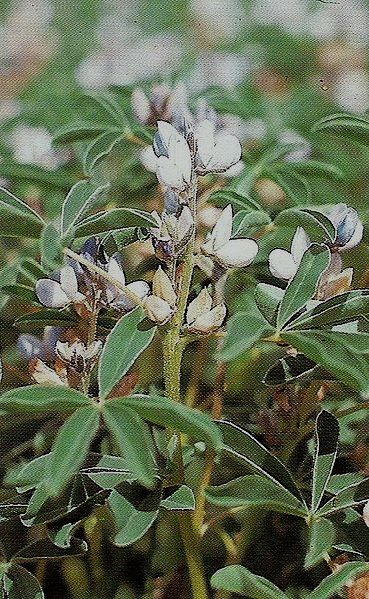
The market is 60 cm long, a perennial herb covered with silky, layered hairs.
The stipe is over 20 cm long, erect, and branched.
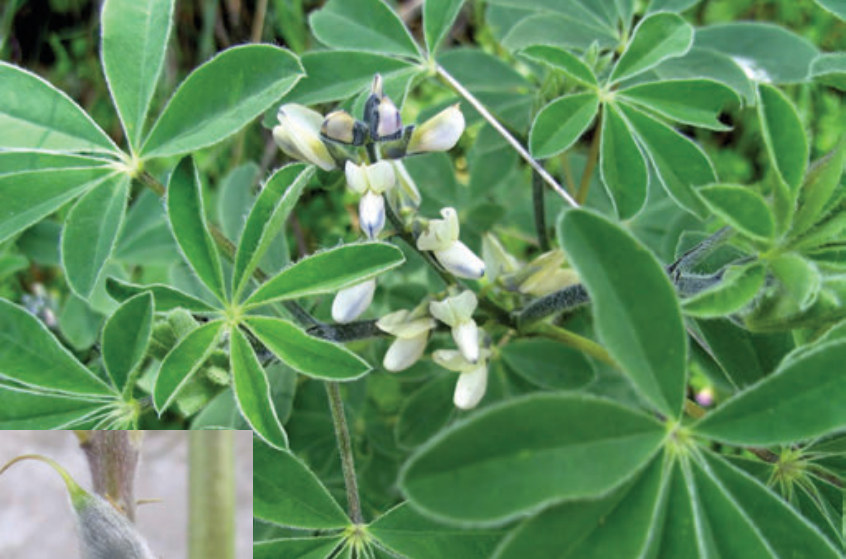
The leaves are palmately compound, fused to the base of the petioles, pubescent-pendicular, and hairy.
The petioles are usually semi-pendicular, oblong-uterine, and 9 cm longer than the leaf blade.
The leaflets are pedicel-based, acuminate, glabrous on the upper surface, and hairy on the lower surface.
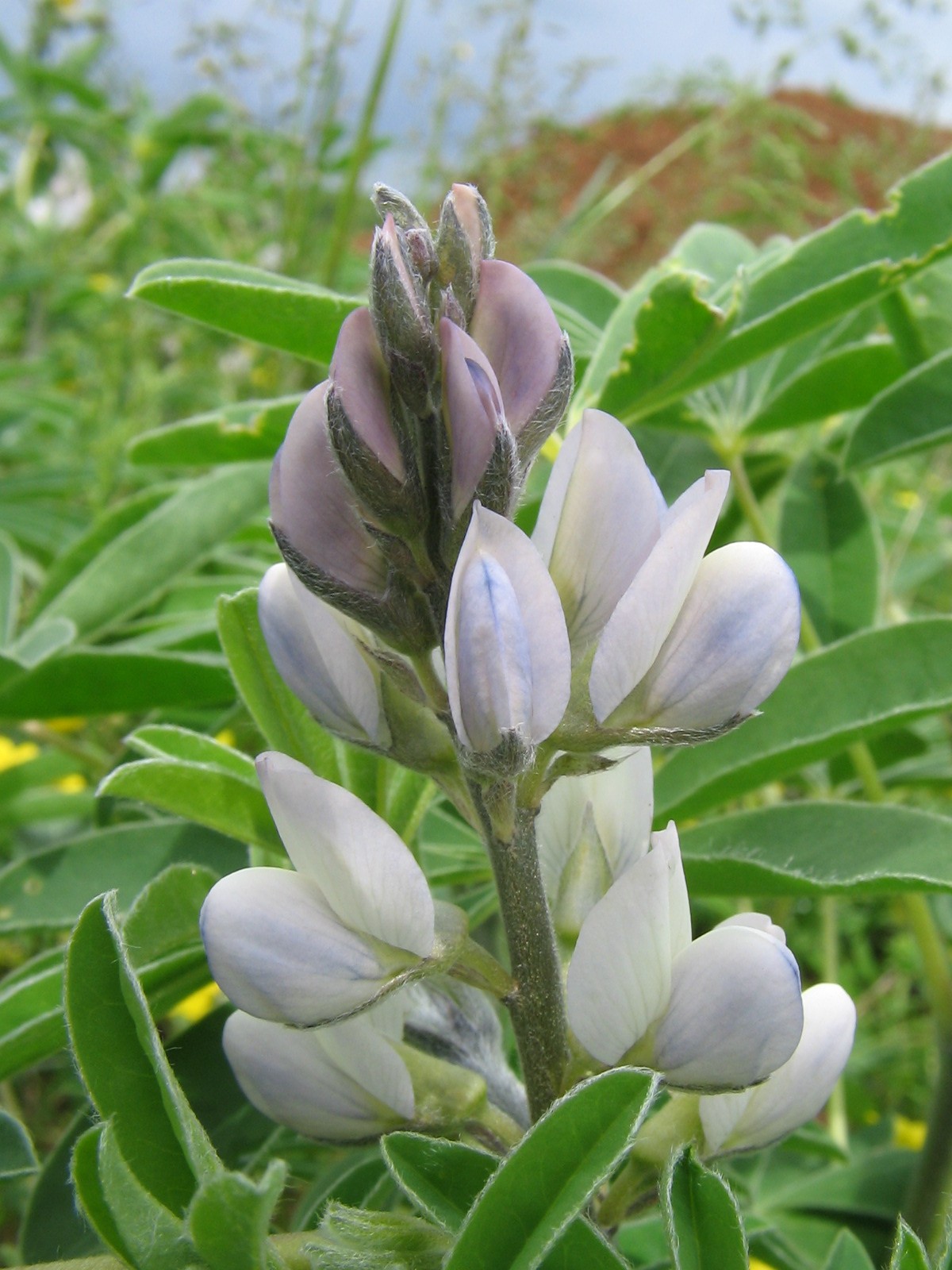
The inflorescence is racemose, with numerous flowers, erect, oblong, over 1 cm long, usually alternate or clustered with 1.5 leaves.
The bracts fall off quickly.
The flower spikes are narrower than the calyx.
The flowers are arranged in widely spaced whorls.
The calyx is nematocyst, green to bluish, hairy on the underside, and bilipped.
The corolla is twice the length of the seeds (4 cm), containing 1.3 x lilac, bluish around the margin, and equal in length to the wings.
The calyx is the length of the calyx, with a flat, linear, white flag ending in a short beak.
The seeds are compressed, lenticular, white to pale brown, and smooth. Flowering occurs from February to April.
Used part
Seeds and leaves. Latin name: Lupinus albus L. L. termis Forssk
chemical components
The leaves contain quinolizidine alkaloids at a rate of up to 3.3%, and this percentage reaches 1.6% in the seeds.
Gramine, lupinine, and sparteine are also present.
Additionally, there are proteins (%), carbohydrates (including stachyose), and fats (%).
The percentage of alkaloids decreases in the seeds of cultivated species (sweet lupin) to less than 0.1%.
Properties and medical uses
Lupin seeds have worm-expelling properties.
It is popularly used as a nervous tonic, cardiac stimulant, diuretic, vermifuge, and for treating some skin diseases, such as eczema and psoriasis.
It helps lower blood sugar in patients, especially since the fiber slows down the body's absorption of glucose (simple sugar) resulting from the breakdown of starches and sugars, thus limiting the occurrence of high blood sugar levels.
It has also been found that this fiber, generally present in grains, combats high cholesterol levels, reduces constipation, and protects against [unspecified conditions].
Lupin seeds are used to treat colon cancer.
A decoction of lupin seeds is used as an enema to eliminate intestinal worms, or applied topically to the hands and body to treat scabies and eczema.
Lupin seeds are also used to treat cardiovascular diseases, high blood pressure, and impaired glucose and insulin metabolism.
Lupin contains inhibitors of metalloproteins (MMP-2 and MMP-9), which cause diseases in the digestive system.
Therefore, these inhibitors are important in reducing inflammatory diseases and tumors, and in stopping the growth of colon cancer cells.
Side effects and precautions
Increased salivation, difficulty swallowing, vomiting, diarrhea, headache, and blurred vision may occur.
In cases of overdose, paralysis and possibly death due to respiratory arrest may develop.
the environment
It can be found naturally on sandy soils.
Lupin grows in many types of soils, and its cultivation is successful in red or calcareous clay soils. It also prefers sunny locations.
Agriculture and productivity
It reproduces by seed.
Seeds are sown 25 cm apart after the soil has been loosened and prepared for planting.
The plants are harvested in the summer, dried, and threshed to extract the seeds.
Nitrogen is fixed by symbiotic bacteria in its roots; therefore, it is preferable to cut the plant after harvesting rather than cutting it back.
Medicago sativa L., Medica sativa (L.) Mill., Medicago sativa var.
vulgaris Alef., Medicago sativa subsp. vulgaris (Alef.) Arcang., Medicago vera Kirschl
History and Heritage
According to Meyerhof (1978), the word "thermos" was transmitted to Coptic from Greek, Arabic, and Aramaic, and from there to Arabic and Persian.
The scientific name (2009) is likely derived from the Greek word "lupus," meaning "wolf," referring to the bitterness of its seeds.
Lupin seeds have been used since ancient times as an appetite stimulant and diuretic. Arabs considered it an aphrodisiac, and Ibn Sina mentioned it.
Medical note
This information is for educational purposes only and does not constitute medical advice.
Poisonous or potent plants should only be used under the supervision of a qualified physician or pharmacist.
Related images