Ashqil | A medicinal plant in the Akhdar encyclopedia
The glycosides of white squill possess properties that strengthen the heart muscle and are used in the treatment of heart failure, venous problems, nervous heart, and arrhythmia. The glycosides of the white squill plant differ from those of the leaves of the foxglove plant (Digitalis sp.) in that t…
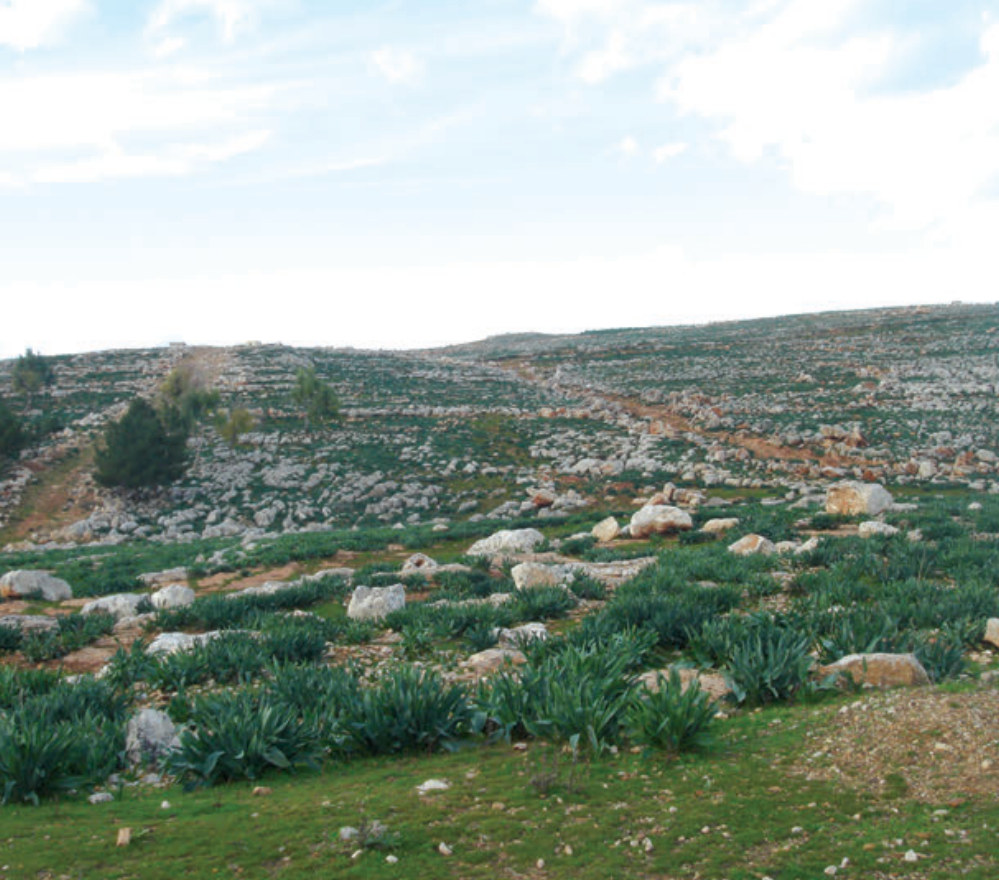
Plant name
The cleaver
Latin name
Urginea maritima (L.) Baker
Common names
Sea squill, sea onion
foreign names
Eng. Sea onion, Sea squill, Fr. Scille maritime
The group
Asparagus
Habitat and Geographic Distribution
Mediterranean
Botanical description
Red.
- cm, thick, hairy, whitish or brown 15 -, perennial herb by means of bulbs.
Bulb 8 cm in diameter, erect, broadly uterine, bluish-green, appears early in May.
- May, stiff, 60 cm, 20 cm long.
- Winter (November) after the end of flowering, continues until April.
- cm, stiff, purplish.
Inflorescence is long, dense, 100 - The inflorescence is leafless, 3 - flower or more.
Brachii are small, membranous, spur-like below the middle.
Flower stalks are erect, 9 mm long.
- White, bearing a medium vein, Akhdar or purplish, 6 mm long, flat, lobes - sleeve length.
The calyx is pubescent, with stamens, filaments narrower than the calyx, and the male reproductive organs are wide at the base.
The anthers are erythroid in color.
The ovary is superior, with three stone fruits.
The fruit is a capsule, three-lobed, with four obovate segments in general.
The seeds are stony, black, and glossy. Flowering occurs from July to early October, before the rains.
Used part
The bulb is harvested after flowering, in late summer and early autumn.
The outer scales are removed, leaving the middle ones intact.
It is then cut into 1 cm thick slices and quickly dried (artificially) to prevent the glycosidic compounds from undergoing enzymatic breakdown.
chemical components
There are two varieties of squill: white squill, the medicinal variety containing cardiac glycosides, and red-scaled squill (also known as red squill or mouse squill), whose cell sap contains anthocyanin pigments.
The white squill bulb contains 3-1% cardiac steroid glycosides.
The main glycoside, scillaridin A, is a crystalline compound that constitutes two-thirds of the glycosides in scillarene A.
This compound, along with a glucose molecule and the intermediate compound scillarenase, is hydrolyzed by the enzyme scillarenase.
It is responsible for the plant's cardioprotective properties.
Scillaridin A is also present, and upon complete hydrolysis, the geni-sialridin appears (an amorphous form, comprising the remaining third of the glycosides in the scales).
Scillarene B, another compound called scillarin, contains salivary substances, sugars (fructoses), valvones, and tannins.
Scillirosidine yields scillilicyanoside upon enzymatic hydrolysis. Red squill contains a toxic glycoside and is used as an excellent rodenticide.
Properties and medical uses
White squill glycosides possess cardiotonic properties and are used to treat heart failure, venous problems, nervous heart, and arrhythmia.
Unlike digitalis sp.
leaf glycosides, white squill glycosides do not accumulate in the body, unlike digitalis.
It should be noted that pharmaceutical preparations of the active ingredients are more potent than the pure active compound.
Sea squill has diuretic, expectorant, and anti-inflammatory properties, effective against bronchitis, coughs, and asthma.
Its preparations are used topically to treat hemorrhoids, disinfect infected wounds, and heal receding gums and loose teeth.
Sea squill has demonstrated anti-inflammatory, antioxidant, antibacterial, and vasodilatory effects, and is beneficial for wounds infected with fungi.
It is also beneficial in treating digestive disorders and rheumatic diseases.
Extracts of squill bulb have anticancer activity (specifically against breast cancer cells).
Side effects and precautions: The plant is generally poisonous if used in large doses.
It is advisable to take its pharmaceutical preparations due to the difficulty in controlling doses of homemade preparations such as squill vinegar.
The plant or its glycosidic compounds should not be used in cases of atrioventricular block, hypercalcemia, or hypertrophic cardiomyopathy.
Hypertrophic cardiomyopathy, hypokalemia, carotid sinus syndrome, ventricular tachycardia, thoracic aortic aneurysm, and Wolf-Parkinson-White syndrome (WPW).
Environment: It grows in warm, sunny locations and spreads on dry sand and hills near the sea.
The bulbs go through a summer dormancy period, during which they must be kept dry. They are sensitive to humidity in winter. Sometimes
pharmaceutical forms
The active ingredients have a more potent effect than the pure form.
Squill is popularly known for its diuretic, expectorant, and anti-inflammatory properties, and for treating bronchitis, coughs, and asthma.
Its preparations are used topically to treat hemorrhoids, disinfect infected wounds, and address receding gums and loose teeth.
Sea squill has demonstrated anti-inflammatory, antioxidant, antibacterial, and vasodilatory effects, and it is beneficial for treating wounds infected with fungi.
It is also helpful in treating digestive disorders and rheumatic diseases, and extracts of sea squill have anticancer activity (against breast cancer cells).
(Side effects and precautions: This plant is generally poisonous if used in large doses.
It is recommended to take its pharmaceutical preparations due to the difficulty in controlling doses of homemade preparations such as squill vinegar.
The plant and its glycosidic compounds should not be used in cases of atrioventricular block, hypercalcemia, hypertrophic cardiomyopathy, hypokalemia, carotid sinus syndrome, ventricular tachycardia, aortic aneurysm or thoracic aortic aneurysm, and Wolff-Parkinson-White syndrome (WPW).) Habitat: It grows in warm, sunny locations and spreads on dry sand and hills near the sea.
The bulbs undergo a summer dormancy period, during which they should be kept dry. They are sometimes sensitive to humidity in winter.
Side effects and precautions
Allergic reactions or drug interactions may occur; self-use should be avoided by pregnant and breastfeeding women, children, and patients with chronic diseases.
the environment
Sea squills thrive in warm, sunny locations, on dry sands and hills near the sea.
The bulbs have a summer dormancy period during which they must be kept dry. They are sometimes sensitive to dampness in winter.
Agriculture and productivity
The plant is propagated by seeds, which are sown as soon as they ripen into pots or bags, one seed per pot, and fertilized with a complete nutrient solution.
It can also be propagated by dividing young bulbs once the plant enters dormancy.
Two to three sections of the bulb are placed in a pot and transplanted to the permanent location after one year of dormancy.
Larger bulbs can be planted directly in the permanent location.
The bulbs retain their remarkable ability to regenerate for several years.
The bulbs are harvested after a six-year growing period, yielding approximately 25,000 bulbs per hectare.
Aloe vera (L.) Burm.
f., Aloe barbadensis Mill., A.
barbadensis var.
chinensis Haworthm., A.
perfoliata var.
vera L., Aloe elongata Murray., Aloe flava Pers., Aloe indica Royle., Aloe lanzae Tod
History and Heritage
The name of the genus Urginea is derived from the name of a tribe in Algeria known as the Beni Urgini, where the plant was first collected.
The species name Urgin means "sea" or "maritima." Squill has been known as a medicinal plant for a long time; it was sacred to the ancient Egyptians, who considered it a ward against demons and evil spirits.
A medical prescription for squill was found in an Egyptian papyrus.
Greek and Arab physicians were also familiar with it. Dioscorides described it as an infusion in vinegar to treat heart ailments.
Medical note
This information is for educational purposes only and does not constitute medical advice.
Poisonous or potent plants should only be used under the supervision of a qualified physician or pharmacist.
Related images


