Chrysanthemum | A medicinal plant in the Akhdar encyclopedia
Calendula, with its anti-inflammatory properties, aids in the production of faradiol. The flowers, containing volatile oils and flavonoids, treat skin and oral inflammation, promote wound healing, treat burns, and regenerate epithelial cells and pharyngeal mucous membranes. They also possess antimi…
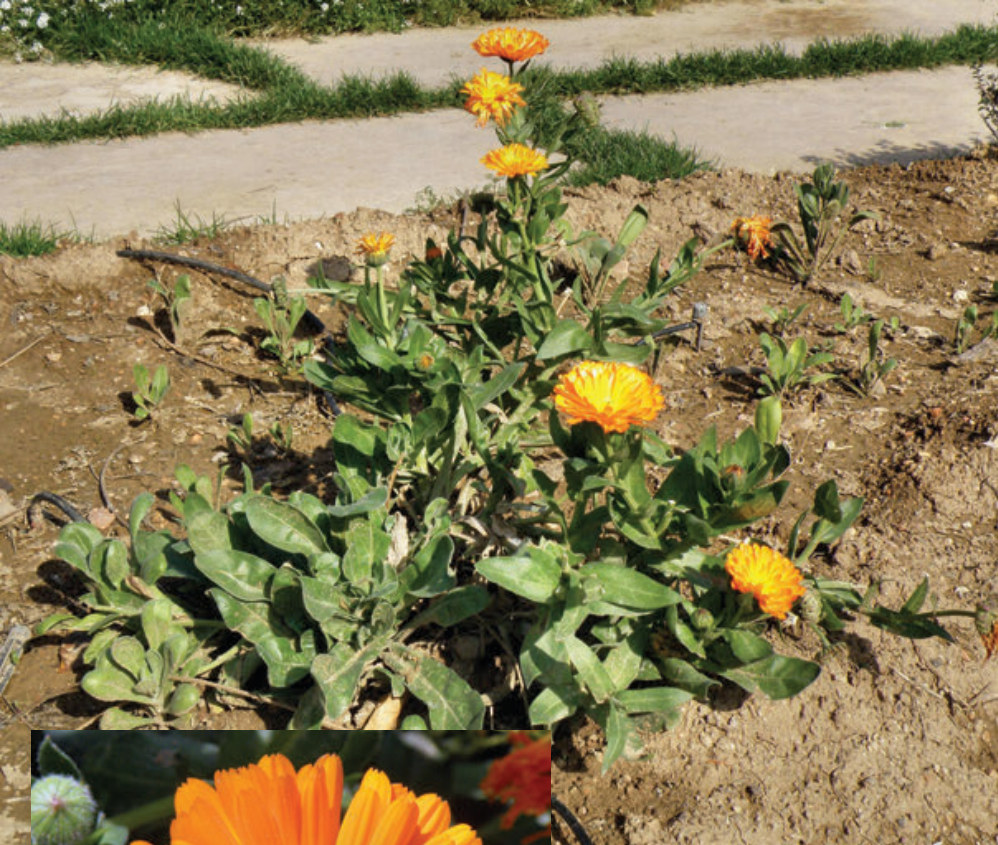
Plant name
chrysanthemum
Latin name
Calendula officinalis L
Common names
Chrysanthemum, garden calendula
foreign names
Eng. Marigold, Fr. Garden Calendula
The group
Star
Habitat and Geographic Distribution
Southern and Central Europe and Western Asia
Botanical description
The stem is branched, 50 cm long, and covered with hairs.
The leaves are alternate, obovate to ovate, the lower leaves petiolate and the upper leaves sessile, with a dull apex, entire margins, and a gradually tapering base.
The inflorescences are terminal headlets, 10 cm long, composed of orange flowers, 7 cm in diameter, yellowish in color, belonging to two types of flowers: ligulate and tubular.
The bracts are in two rows.
The ligulate flowers are located at the periphery and are fertile female flowers.
Their corolla consists of a fusion of tertiaries to form a very short tube that soon splits into a tongue-like shape, 7 mm long, with a third apex 7 mm long and rough: 40 mm long.
The central flowers are tubular, five-toothed, hermaphroditic but functionally male, yellow in color, and smaller than the previous ones.
Rows, 3 - The fruit is aconite, arranged in a curved shape of varying degrees: the outer part is boat-shaped with short spines on its dorsal surface, the inner part is strongly curved (8 semi-ringed), smaller in size, bearing wrinkles in a broad pattern: rhizome, pubescence absent. It flowers for a long period of the year, especially in summer.
Used part
Dried flowers. The plant has a strong, unpleasant odor. Latin name: Calendula officinalis L.
chemical components
10% - The flowers contain: triterpene saponin glycosides, including: triterpene alcohols and their families (especially tirterpene monooles 0.8%, triterpenedioles 4%, triterpene trioles, taraxasterol, faradiol), lauric and palmitic acids, and others.
Quercetin, quercetin, isorhamnetin, the most important of which is isorhamnetin 0.8-0.3%, flavonoids.
Alpha-cadinol: its most important compound is alpha-cadinol 0.2%, volatile oil.
Salicylic acid, caffeic acids, phenolic acids, and calendin, bitter compounds.
Umbelliferone, esculetin, scopoletin, coumarins: scopoletin, tannins, gums, and mucilage.%, fatty acids, polysaccharides, lutein, zeaxanthin, carotenes: the most important of which are tertiary saponins, flavones, carotenes, and volatile oil.
The Akhdar herb contains tertiary saponins, flavones, carotenes, and volatile oil.
Properties and medical uses
Calendula, with its anti-inflammatory properties, aids in the production of faradiol.
The flowers, containing volatile oil and flavonoids, treat skin and mouth inflammation, promote wound healing, treat burns, and regenerate epithelial cells and pharyngeal mucous membranes.
They are effective against Candida monosa and Staphylococcus aureus.
The flowers also possess antimicrobial properties, such as against bacteria, and preliminary studies have shown their effectiveness against HIV, rhinovirus, and vesicular stomatitis.
An infusion or decoction of the flowers is traditionally used to treat gastritis and chronic ulcers, improve digestion, increase bile secretion, relieve intestinal spasms, and expel worms and parasites.
Infusions or extracts of the flowers, in the form of tinctures or ointments, are used topically to treat conjunctivitis, wounds, eczema, chapped hands, fistulas, and nipple infections.
Side effects and precautions
It should not be used by pregnant women.
the environment
Chrysanthemums grow wild in orchards, along roadsides, and on slopes, preferring open, moist locations.
They thrive in semi-humid, semi-arid, and dry climates in warm and temperate regions.
The optimal temperature for their growth is 30°C.
They are susceptible to frost and cold, which can damage the flowers.
The flower clusters respond well to warmth and humidity, opening on sunny, dry days and closing on cloudy and rainy days.
They are light-loving but can also grow in partial shade.
They can be cultivated in all types of soil but prefer warm, gravelly, or calcareous loamy soils.
Agriculture and productivity
Sow seeds in the hole and cover with a layer of soil.
Sow seeds in the spring in rows: within beds or basins, placing a small mound between each seedling.
The seedlings emerge lightly from the soil and are watered immediately.
Alternatively, they can be sown in rows spaced 3 days apart until the first flower bud appears.
Flowers bloom 30 days after sowing, and vegetative growth continues 15 days after the flower buds appear.
The inflorescences appear 15 days after the appropriate maintenance practices are carried out, including thinning, weeding, fertilizing, and watering (care is taken to avoid water stress during flowering and to prevent the soil from drying out) and removing the lower, wilted leaves.
The plant blooms year-round in warm regions but stops flowering in winter in cold regions.
Harvest the inflorescences in sunny weather, when the outer ligules are fully formed.
Place them horizontally and dry in the shade without piling them up.
Collect the leaves in the morning after the dew has evaporated.
400 kg/hectare of dried flowers, and approximately 1.5 tons/hectare of seeds under good conditions.
History and Heritage
The Arabic name "Azareen" comes from the Persian word meaning "the color of fire," referring to the flower's color.
The scientific name for the genus is from the Latin "calendae," meaning "first day of the month," possibly referring to the monthly calendar.
The name "Azareen" (also spelled Calendae) is derived from the Latin "calendae," meaning "first day of the month," possibly referring to the monthly calendar.
The plant's flowers, known as "officinalis," have been used in traditional medicine for a long time and were considered an effective treatment for smallpox and measles.
Greek, Indian, and Arab physicians used it.
The earliest writings on the plant are found in Dioscorides's work, where he used an infusion of the plant for liver ailments and intestinal relaxation.
He also recommended it in his book on herbs, which he wrote to improve eyesight, achieve mental clarity, and bring joy and happiness to the soul. It was also mentioned by Ibn Sina, al-Ghassani, and Ibn al-Baytar.
Medical note
This information is for educational purposes only and does not constitute medical advice.
Poisonous or potent plants should only be used under the supervision of a qualified physician or pharmacist.
Related images


