Myrtle | A medicinal plant in the Akhdar encyclopedia
The essential oil and leaves possess antiseptic, antibacterial, antifungal, and antiviral properties. The oil is used to treat respiratory ailments (bronchitis, sinusitis, and whooping cough), intestinal infections, and urinary tract infections (bladder and prostate). The leaves, with their essenti…
Plant name
Ace
Latin name
Myrtus communis L
Common names
Myrtle, basil, hollyhock, myrtle, hollyhock, basil, hollyhock
foreign names
English: Common myrtle, French: Myrte commun
The group
Asian
Habitat and Geographic Distribution
Native to the Mediterranean and extending to neighboring regions.
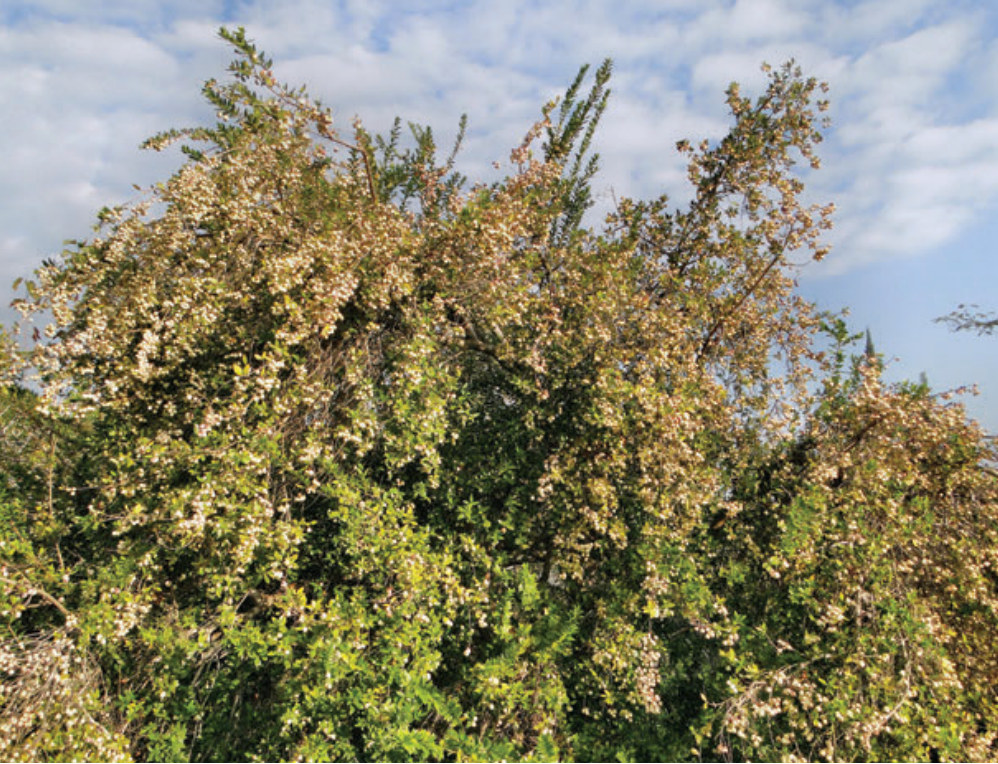
It grows extensively in the mountainous areas of many Mediterranean Arab countries as a companion plant in degraded forests.
Botanical description
4 cm - m.
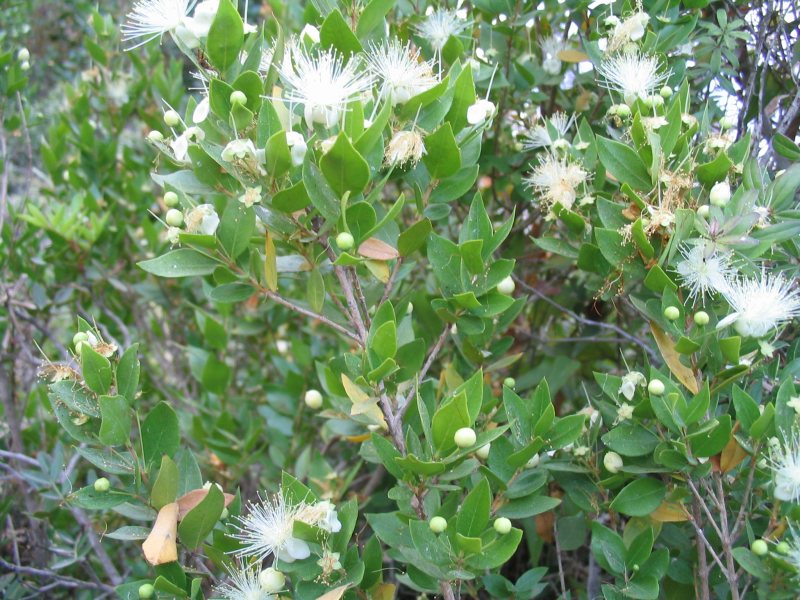
The stem is numerous and branched, with four-sided branches.
The leaves are 0.5-2 mm long, evergreen, glabrous, perianthic to - mm long, aromatic when rubbed, opposite or pinnate, short-stemmed, leathery, ovate-erect: ellipsoidal, pointed at the apex, glossy green, with translucent dots on their surface.
The stipules are deciduous.
The flowers are solitary, mm in diameter, ovate, 3- cm long, and borne in spikes.
The bracts are two, linear, and deciduous.
The calyx has five fused sepals, about 1.5 cm long, white, obovate to rounded, about three times the length of the sepals.
The stamens are pointed.
The corolla is stone-like, each containing numerous ovules.
The fruit is a berry with a strong, free-flowing aroma.
The ovary is inferior, consisting of blue flowers when ripe (depending on the variety), broadly elliptic to nearly spherical, white or blackish-white flowers, topped by a crown of methyl-like lobes of the calyx.
Flowering occurs from May to August, and the fruit ripens in November. The size of the flowers and fruit varies according to the variety.
Used part
The dried leaves, young, leafy, and flowering branches, and the essential oil extracted from the plant are harvested during May and June. Latin name: Myrtus communis L.
chemical components
The most important components of this plant are: 1,8-cineole (45-15%), geraniol (3-2%), alpha-terpineol (10-4%), limonene (38-15%), myrtenylacetate (20-4%), geranilacetate (2%), myrtenol (1-5%), myrtenol (1.5%), phloroglucinols, myrtocomulone a and b, and tannins.
Properties and medical uses
The essential oil and leaves possess antiseptic, antibacterial, antifungal, and antiviral properties.
The oil is used to treat respiratory ailments (bronchitis, sinusitis, and whooping cough), intestinal infections, and urinary tract infections (bladder and prostate).
The leaves, with their essential oil and tannins, are antiseptic, astringent, and hemostatic.
They have been shown to prolong sleep and lower blood sugar.
A decoction of the leaves is traditionally used for respiratory diseases, prostatitis, and diarrhea.
A decoction of the leaves, a tincture made from the leaves, or the essential oil is used topically as an antiseptic for superficial wounds, to remove blisters, and to treat skin ulcers, psoriasis, and hemorrhoids.
A paste made from the leaves is used to strengthen hair and reduce hair loss.
Myrtle berries are eaten fresh for their appetite-stimulating properties and their effectiveness in reducing diarrhea and intestinal gas.
The water used to distill the oil from the leaves and flowers is called "angel water" and is used as a nasal antiseptic.
Side effects and precautions
Myrtle oil should not be used in cases of gastrointestinal inflammation or acute liver disease, and the essential oil should not be used by pregnant women or children. Overdoses of plant preparations can sometimes cause headaches or nausea.
Other uses
The essential oil is widely used in the perfume industry.
the environment
Myrtle thrives in semi-arid, semi-humid, and humid bioclimatic zones.
It grows in damp places and tolerates various soil types, but prefers fertile, sunny soils.
It is well-suited for cultivation in warm, frost-free areas and can even survive in dry soils, provided they are protected from cold winds.
Agriculture and productivity
It is propagated by seeds soaked in warm water for 24 hours and sown in late winter.
Maintenance includes watering, fertilizing, and weeding.
Transplanting to the permanent location takes place in late spring or early summer.
Myrtle can also be propagated by stem cuttings, best collected in late autumn or early winter.
Watering is necessary during the first year after transplanting.
Other species include Nitraria retusa (Forssk.), Aschens, Peganum retusum Forssk, N.
tridentata Desf., Nitraria senegalensis Poir, and Nitraria sericea Jaub. & Spach.
History and Heritage
It means common.
The origin of the word "myrtle" is known, although similar words exist in Semitic languages.
The descriptive term for the plant has been known since ancient times, as scholars have found its branches in some Pharaonic tombs.
It appears in many medicinal recipes in Pharaonic papyri for treating urinary tract infections, bladder inflammation, and regulating urination.
The Romans knew it, and the Greeks used it to symbolize strength and victories.
Muslims used, and still use, myrtle branches in some countries to decorate graves during holidays. Ibn Sina and Ibn al-Baytar mentioned its various medicinal properties.
Medical note
This information is for educational purposes only and does not constitute medical advice.
Poisonous or potent plants should only be used under the supervision of a qualified physician or pharmacist.
Related images