Styrax | Medicinal plant in the Akhdar Encyclopedia
Styrax resin is used traditionally to increase bronchial secretions, as an expectorant, and in the treatment of coughs and respiratory tract infections, to improve digestion, regulate menstruation, and detoxify the body. It is used topically as an antiseptic and in the treatment of wounds, ulcers,…
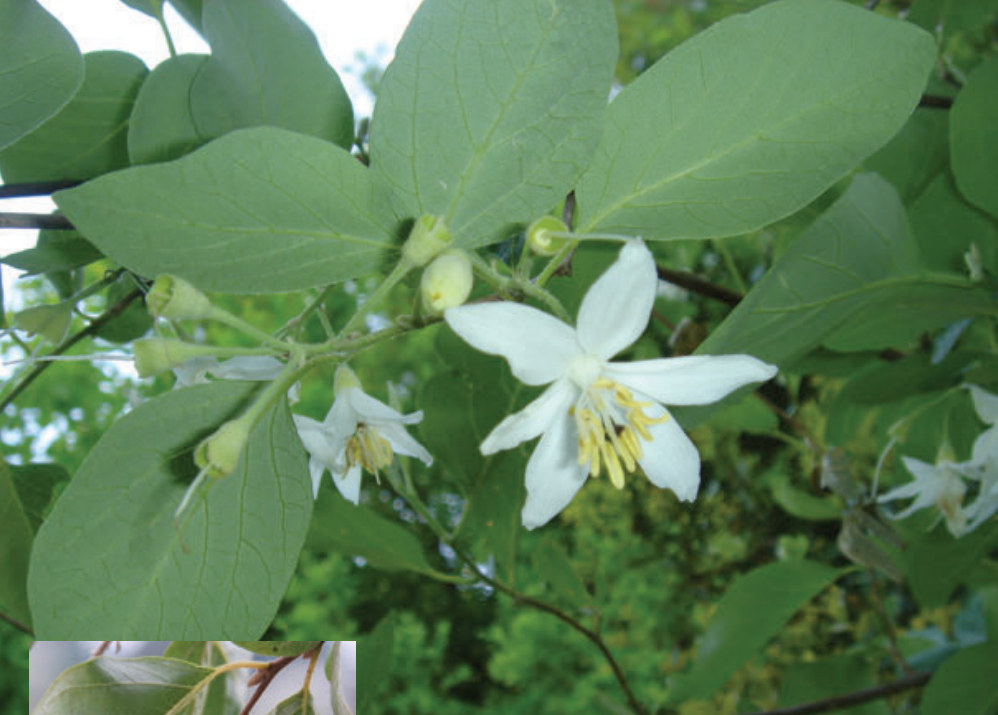
Plant name
I'll hit you
Latin name
Styrax officinalis L
Common names
As Tark, Al-Lubna, Al-May'ah Al-Nashifah, Al-Hawz, Al-Abhar
foreign names
Eng. Storax tree, Fr. Aliboufier
The group
Styroche
Habitat and Geographic Distribution
Styrax benzoides is the only species in the genus that grows in the eastern Mediterranean countries.
It is naturally found in Turkey, Syria, and Lebanon, from where it spread to Europe.
Some attribute the name "styrax" to Lebanon, its original habitat.
Other species, including shrubby and woody varieties, are found in Sumatra, China, Korea, Malaysia, Central Asia, and tropical America. The genus Styrax benzoides includes several species.
Botanical description
The root is *Genesis pubescens*.
It is a shrub or small tree, shallow in length and shallow in depth.
The young branches and the underside of the leaves are grayish, the upper surface is *Akhdar*, almost glabrous.
The leaves are simple, alternate, petiolate, auricular, ovate to rounded or elliptical, entire.
The flowers are fragrant, borne together in an inflorescence.
They are radially symmetrical, five-lobed, clustered every centimeter, and basally racemose.
The calyx is nearly complete and bell-shaped.
The corolla is about several times the length of the calyx, with oblong lobes.
The stamens are white, fused into a basal tube, and their filaments are petal-shaped.
The ovary is superior and solitary.
The fruit is a dry, hairy drupe with a succulent, yellowish, ovate to spherical drupe. The base of the fruit is succulent. The seeds bloom from April to June.
Used part
Aromatic resin (Storax gum) which is obtained by making a cut or incision in the bark of the tree trunk
chemical components
With cinnamic acid, 25% benzoic acid, gum resin, and vanillin.
Properties and medical uses
Styrax resin is used traditionally to increase bronchial secretions, as an expectorant, and in the treatment of coughs and respiratory tract infections, to improve digestion, regulate menstruation, and detoxify the body.
Topically, it is used as an antiseptic and in the treatment of wounds, ulcers, rheumatism, gout, and joint diseases.
The natural compounds isolated from it and their synthetic derivatives, in addition to the various parts used as extracts, have shown valuable biological activity as antitumor, hemolytic, antileukemic, antifungal, antibacterial, antioxidant, and tyrosinase inhibitors.
It is used in folk medicine to treat cardiovascular diseases, tuberculosis, edema, stroke, leprosy, constipation, skin ulcers, scabies, respiratory problems, skin rashes, and diphtheria.
Side effects and precautions
Allergic reactions or drug interactions may occur; self-use should be avoided by pregnant and breastfeeding women, children, and patients with chronic diseases.
Other uses
Styrax is used in perfumery (as a fixative).
The resin of the resin (al-Abar) is used in the production of a type of sacred aromatic incense used in churches.
Rosaries are made from its hard fruit, and the fruit is also used as bait for fishing.
the environment
Common in forests, it grows in subtropical and temperate climates, including the Mediterranean basin.
This species is widespread in the mountainous regions of the Levant at varying altitudes, within forests of common oak and Aleppo pine.
The storax is environmentally resilient, tolerating low temperatures, but is sensitive to spring frosts, which damage flower buds.
It prefers moist, fertile, slightly acidic soil.
Cultivation and Productivity: The plant is propagated from seed with difficulty and requires careful fertilization and irrigation during its early years.
Urtica dioica L.
Urtica dioica var.
vulgaris Wedd., Urtica dioica subsp. eudioica Selander, Urtica dioica var. latifolia ledeb
History and Heritage
It is the name of the styrax tree (most likely of Semitic origin), which the Arabs used and called Styrax officinalis, the scientific name for the genus, meaning medicinal or constitutional.
The new styrax name was then derived from the Arabic word.
The tree exudes a resin called storax, or monk's storax, or monk's storax.
Accounts mention that Herodotus described how the Phoenicians brought storax to Greece and how the smoke rising from burning the plant was sufficient to repel the winged serpents that guarded those trees.
Ibn Sina mentioned the benefits of storax in his book "The Canon of Medicine," and Ibn al-Baytar mentioned in his book "The Comprehensive Book on Simple Drugs and Foods" that storax cures coughs, colds, catarrh, and hoarseness.
Medical note
This information is for educational purposes only and does not constitute medical advice.
Poisonous or potent plants should only be used under the supervision of a qualified physician or pharmacist.
Related images


