Rosemary | A medicinal plant in the Akhdar encyclopedia
The herb has been used in traditional medicine to treat various ailments, including seizures, ulcers, gout, rheumatism, inflammation, dizziness, tremors, paralysis, diarrhea, and hyperglycemia. Rosemary also possesses hepatoprotective properties…
Plant name
rosemary
Latin name
Rosmarinus officinalis L
Common names
Rosemary
foreign names
Eng. Rosemary, Fr. Rosmarin
The group
oral
Habitat and Geographic Distribution
North African countries bordering the Mediterranean and southern European countries. Its cultivation has spread to the eastern Mediterranean countries.
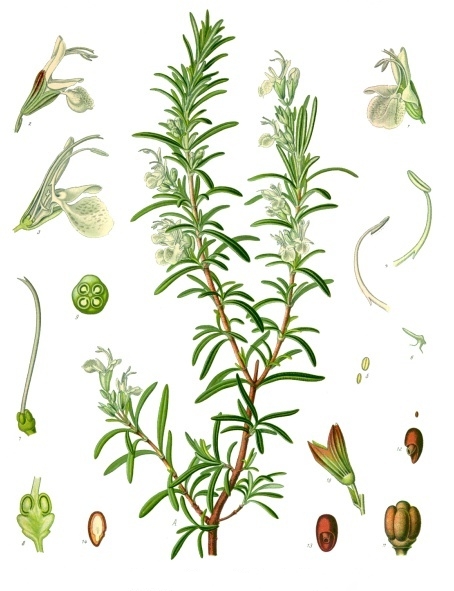
Botanical description
The leaves are aromatic, linear, and 150 cm long.
This perennial, evergreen, woody, vigorous shrub is highly branched, with entire margins that curl downwards.
The leaves are leathery, green on the upper surface, and pale green on the lower surface.
The main vein is prominent on the lower surface and recessed on the upper surface.
The leaves are mm long.
Young leaves are hairy on the upper surface, while older ones are glabrous.
The flowers are semi-perennial, blue or rarely purple, with fused sepals, bilipped, and hairy.
The corolla is bilipped and white, and grows in short, racemose inflorescences.
The lower lip of the calyx is relatively large and deeply divided into two parts.
The male consists of two stamens that protrude from the corolla, while the other two stamens are reduced to a calyx.
The fruit is a four-lobed acinus, brown in color.
Flowering occurs from February to September.
The species exhibits considerable variation, and numerous varieties and chemical types have been identified.
Used part
The flowering tops, the dried leaves (collected after the flowering period) (aromatic scent, pungent and bitter camphor-like taste), and the oil extracted from the leaves.
chemical components
Rosmarinic acid, the most important of which is rosemary acid; caffeic acid derivatives; bitter diterpene compounds, the most important of which is carnosolic acid (picrosalvin), responsible for the bitter taste; isorosmanol; rosmadial; rosmaridiphenol; and rosmariquinone.
Flavonoids, including homoplantiginin, hesperidin, diosmin, and cirsimarin.
Triterpenes, the most important of which are oleanolic acid and ursolic acid and their esters.
Volatile oil (1-2.5%), the composition of which varies according to the variety; the most important of which is cineole.
e) Eucalyptol (1,8-cineole) 2-5%, alpha-pinene 15-25%, camphor 25-10%, camphene, borneol, bornyl acetate, beta-caryophyllene, limonene, p-cymene, myrcene, linalool, terpineol, and verbenone.
Properties and Medical Uses: The drug has been used in folk medicine to treat various disorders, including seizures, ulcers, and gout.
Rosemary is used to treat gout, rheumatism, inflammation, dizziness, tremors, paralysis, diarrhea, and hyperglycemia.
It possesses hepatoprotective properties, relieves hereditary biliary spasms, acts as an antioxidant due to its rosmarinic acid content, reduces mutations, and inhibits tumor growth.
The plant is used to treat high blood pressure, loss of appetite, and digestive disorders (in cases of spasms, it helps relax the smooth muscles lining the digestive tract).
It also helps in...
Treatment of Alzheimer's disease.
A decoction of the plant or its essential oil is used topically to stimulate blood circulation and treat rheumatism, and in the form of compresses to cleanse and treat wounds, repair skin tissue, treat eczema, and relieve muscle pain, nervous exhaustion, and sciatica.
The plant is currently considered one of the most promising herbal medicines due to its antioxidant, anti-inflammatory, and antimicrobial properties, and for treating inflammatory and infectious skin diseases, wound healing, and as an anticancer agent.
It has been used medically to treat edema.
The claws in rats or mice, acute liver injuries, and asthma were treated, and the aqueous extract was administered via gavage, intraperitoneal, and orally.
The most evaluated biomarkers were tumor necrosis factor, interleukin, glutathione peroxidase, glutathione, catalase, myeloperoxidase, interleukin, superoxide dismutase, malondialdehyde, and glutathione peroxidase.
The plant has great medical importance due to the presence of a diverse group of interesting specialized metabolites.
In particular, mono-, mono-, sesqui-, di-, di-, sesqui-, and triterpenoids, as well as phenylpropanoids, phenolic acid derivatives, flavonoids, and alkaloids.
(C30) dammarane triterpenoids (C25) and C23-sesterterpenoids, and the compound *Pate*.
(C20 + C10 triterpenoids) Food and Cosmetic Uses: Rosemary is used as an appetite stimulant and flavoring agent.
Its essential oil is included in many food products (beverages and meats) to impart flavor and aroma and to preserve them for extended periods without spoilage or decay.
The essential oil is also used in inexpensive cosmetics and perfumes, as well as in shampoos and hair-strengthening soaps.
Precautions: Rosemary is considered a safe herb for adults, except for pregnant or breastfeeding women.
Rosemary is considered safe when used as directed. At the exact recommended doses
Properties and medical uses
Rosemary has been used in traditional medicine to treat various ailments, including seizures, ulcers, gout, rheumatism, inflammation, dizziness, tremors, paralysis, diarrhea, and hyperglycemia.
It possesses hepatoprotective properties, is a remedy for hereditary biliary spasms, acts as an antioxidant due to its rosmarinic acid content, and inhibits mutations and tumor growth.
The plant is used to treat blood pressure problems, loss of appetite, and digestive disorders (in cases of spasm, it helps relax the smooth muscles lining the digestive tract).
It also helps in the treatment of Alzheimer's disease.
A decoction of the plant or its essential oil is used topically to stimulate blood circulation and treat rheumatism, and in the form of compresses to cleanse and treat wounds, repair skin tissue, treat eczema, and relieve muscle pain, nervous exhaustion, and sciatica.
*Sciatica* is currently considered one of the most promising herbal medicines due to its antioxidant, anti-inflammatory, and antimicrobial properties, and for treating inflammatory and infectious skin diseases, promoting wound healing, and acting as an anticancer agent.
Medically, it has been used to treat claw edema in rats or mice, acute liver injuries, and asthma.
The aqueous extract was administered via gavage infusion, intraperitoneally, and orally.
The most evaluated biomarkers were tumor necrosis factor, interleukin-glutathione peroxidase, and glutathione.
The plant contains catalase, myeloperoxidase, interleukin, superoxide dismutase, malondialdehyde, and glutathione peroxidase.
It is of great medicinal importance due to the presence of a variety of interesting specialized metabolites, particularly mono-, mono-, sesqui-, di-, di-, sesqui-, and tri-, as well as phenylpropanoids, phenolic acid derivatives, flavonoids, and alkaloids.
These include C30-, C25-, and C23-sesterterpenoids, and the compound *Phyllum acetyl*.
(C20 + C10) Triterpenoids.
Food and Cosmetic Uses: Rosemary is used as an appetite stimulant and flavoring agent.
Its essential oil is used in many food products (beverages and meats) to impart flavor and aroma and to preserve them for longer periods without spoilage or decay.
The essential oil is also used in inexpensive cosmetics and perfumes, as well as in shampoos and hair-strengthening soaps.
Side effects and precautions
Rosemary is generally considered safe for adults, except for pregnant or breastfeeding women, and is safe when used exactly as recommended.
the environment
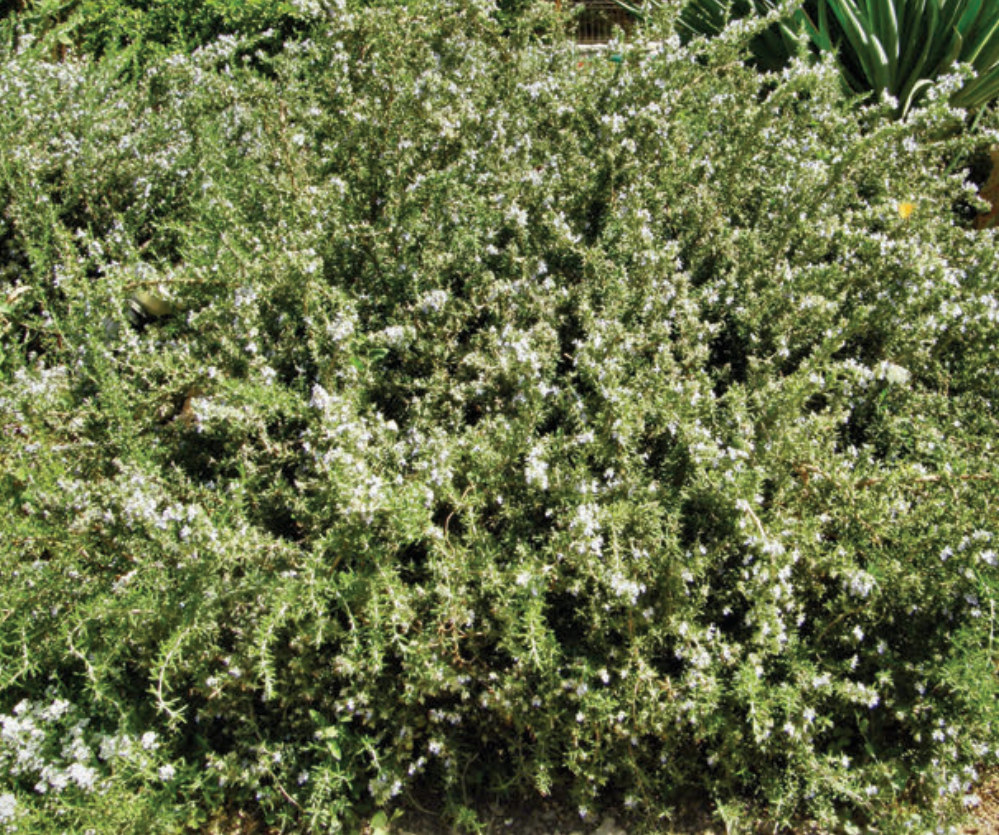
The plant grows wild in highlands and near forests in semi-humid and humid environments found in temperate and warm regions.
It tolerates low temperatures, even at night, down to freezing, but its growth weakens or ceases under these conditions.
It thrives in light and sun.
It is cultivated in various agricultural or mountain forestry areas, or on well-drained, light-colored, calcareous or yellow-textured plateaus. It has a high tolerance to salinity and is therefore found along coastlines.
Agriculture and productivity
The plant is propagated by seeds sown directly in the ground, or germinated in special seedbeds from late winter to early summer.
When they reach a suitable length, they are transplanted to their permanent location.
It is preferable to propagate it by stem cuttings or division at the beginning of spring.
Cuttings are taken from one-year-old branches, 10-15 cm long, and containing at least 3 buds.
They are then rooted in special seedbeds for a week, after which they are transplanted to their permanent location.
It is planted in the upper third of the row at a distance of 60-70 cm between plants and watered thoroughly.
Fertilizers improve production.
The plant flowers in spring and again in autumn.
Harvesting takes place between April and September, starting in the second year, at a height of 25-30 cm, and then the plants are dried.
One hectare yields 2.5-6 tons of dried herb and up to 60-70 kg of essential oil. Salvia officinalis L.
History and Heritage
The scientific name for the genus is *Rhos*, derived from the Greek word *rhous*, meaning "sea" or "marinus." The name refers to sea sumac, not "sea dew" as some sources suggest.
The species name, *Distori officinalis*, is used medicinally.
The ancient Greeks used it as a crown for the wise, in wreaths for celebrations and mourning, and its branches were used to ward off ghosts and nightmares, among many other folk beliefs.
It was also used as a medicine to stimulate the brain and strengthen memory, and the plant is considered a symbol of remembrance.
It is said that the first person to cultivate it in England was the wife of King Edward III in the 4th century.
Medical note
This information is for educational purposes only and does not constitute medical advice.
Poisonous or potent plants should only be used under the supervision of a qualified physician or pharmacist.
Related images