Lemongrass | A medicinal plant in the Akhdar encyclopedia
The plant extract possesses anti-inflammatory, antibacterial, antioxidant, and diuretic properties. A decoction of the plant is traditionally used to treat abdominal colic and flatulence, as a urinary tract antiseptic, and as a mild diuretic. The essential oil is used topically in compresses to tre…
Plant name
I save
Latin name
Cymbopogon schoenanthus (L.) Spreng
Common names
Sweet flag, rock grass, camel grass, Arabian spikenard, halfa grass, allies of Mecca
foreign names
Camel grass (English), Camel grass (French)
The group
kidney
Habitat and Geographic Distribution
Widespread in North Africa, the Arabian Peninsula, India and Pakistan
Botanical description
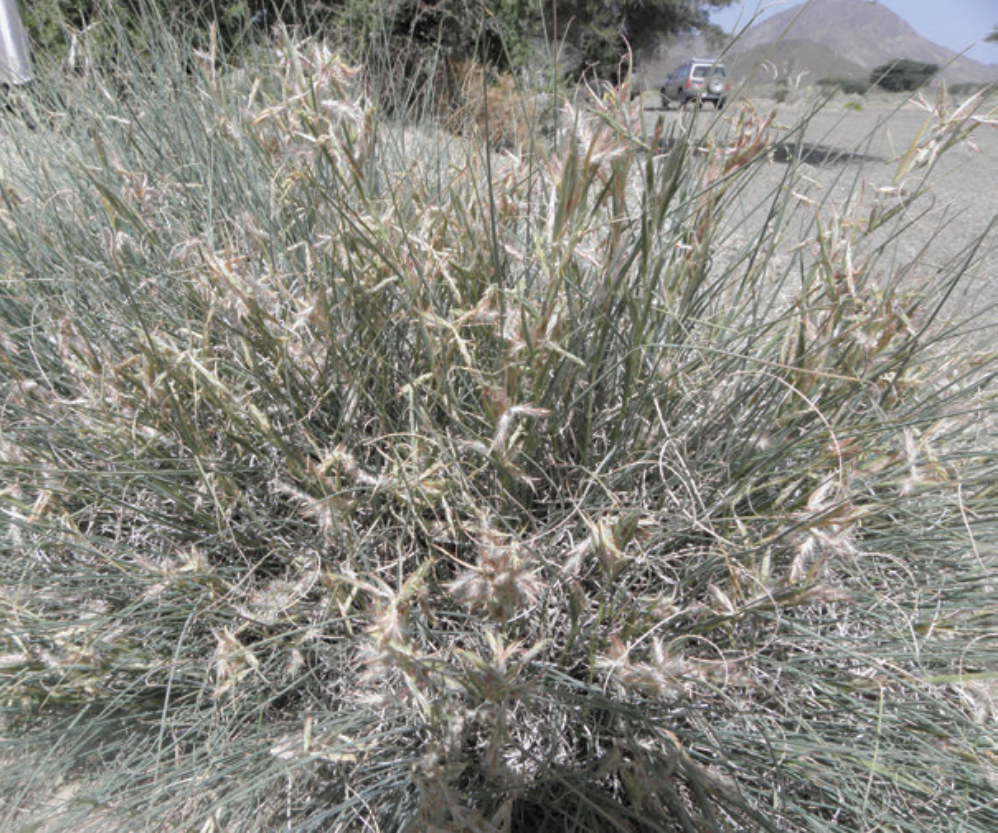
cm, surrounded on the bottom by bases 60 - a perennial herb growing in dense clusters, with an aromatic scent.
The stem is erect, 3 mm long, and rough: the sheaths of the old leaves are 30 cm long.
The leaf blade is linear: narrow to thread-like, rough, up to 3 cm long, surrounded by bracts resembling a bract (the sheath is 40 - Akhdar gray).
The spikelets are gathered in oblong inflorescences 4 mm long.
The inflorescence consists of broad, sparse, and bladeless bundles.
The spikelets bear white hairs 4 mm long from the erect or drooping clusters, emerging in pairs of unequal length, as the lower pair is very short, and each pair is supported by a bract (leaf sheath).
The spikelet contains two flowers, arranged in pairs, the first having a stalk, male, 7 mm long, and lacking hairs, and the other 7 mm long or neutral.
The fruit is a cyme, hermaphroditic, bearing a sap-like, elliptical-shaped stalk. Flowering occurs in spring.
Used part
Camal plant, and essential oil
chemical components
Alkaloids, piperitone, volatile oil rich in valphenates, steroids, and tertiary terpenes
Properties and medical uses
The plant extract possesses anti-inflammatory, antibacterial, antioxidant, and diuretic properties.
A decoction of the plant is traditionally used to treat abdominal colic and flatulence, as a urinary tract antiseptic, and as a mild diuretic.
The essential oil is used topically in compresses to treat sciatica (lumbago), rheumatism, joint and back pain, uterine disorders, and skin redness.
Side effects and precautions
Use with caution in patients with kidney failure; consulting a doctor is recommended.
Other uses
It is used as a herbicide.
Its aromatic compounds are also used in the manufacture of piperitone. The volatile oil is used for its aromatic compounds.
Food uses
Not for food use
the environment
This plant thrives in diverse environments, though it flourishes in warm tropical and subtropical climates.
It can tolerate relatively colder regions if protected during autumn and winter.
While it prefers full sun, it also tolerates partial shade. It grows well in light, fertile, well-drained, and aerated soils.
Agriculture and productivity
The plant is propagated vegetatively by division, as it does not produce sufficient quantities of seeds due to the scarcity of its flowers, especially in temperate regions.
The plant's foliage is cut twice a year in the first year, but subsequent cuttings are possible.
History and Heritage
The gender name was mentioned in the previous type.
note
Harvesting the plant in the morning is preferable to preserve the quality of the essential oil.
Medical note
This information is for educational purposes only and does not constitute medical advice.
Poisonous or potent plants should only be used under the supervision of a qualified physician or pharmacist.
Related images


