Plantain (Plantago lanceata) | Medicinal plant in the Akhdar Encyclopedia
The sap of the Akhdar plant, containing aucubigenin, possesses antibacterial properties, and it is believed that geni, aucubigenin, and saponin compounds contribute to these properties. The leaf sap promotes the breakdown and hydration of aucubin, aiding in blood healing and wound healing, and is u…
Plant name
Plantain
Latin name
Plantago lanceolata L
Common names
Plantain, Lesser Plantain, Calf
foreign names
Eng. English plantain, Fr. Plantain lanceolé
The group
Plantain
Habitat and Geographic Distribution
Turin - Siberian and Mediterranean, and Irene - European
Botanical description
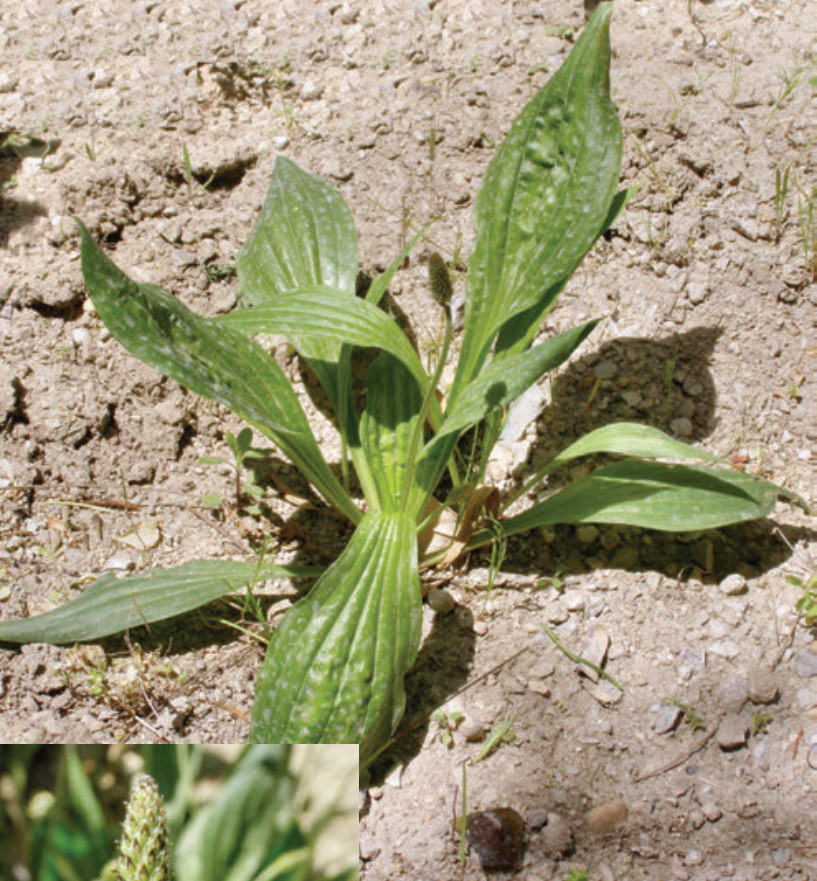
60 cm, stemless, glabrous or 60 - a perennial herb of slightly hairy height, with leaves arranged in a basal rosette.
The leaf is linear, uterine, acute, with parallel veins that converge at the apex.
From the leaf emerges a leafless, five-grooved petiole, extending towards the roots, bearing numerous small, whitish-brown flowers that form racemes, ovate or spherical.
The anthers of the stamens are yellowish-white, protruding from the flower and flapping in the air.
The fruit is an oblong capsule that splits horizontally and contains two chambers with a single small, smooth seed.
Used part
The leaves, the tender and dry plant, and the plant's succulent parts.
chemical components
Rhamnogalacturonane, abinogalactane, and glucomannans: 2-6% of which are mucilage compounds, the most important of which are: 2-3% iridoide monoterpenes (mono-ironoid glycosides), aucubin (rhinantin), luteolin, apigenin (the most important), flavonoids, tannins, acteoside, neochlorogenic acid, chlorogenic acid (the most important of which are caffeic acid esters), minerals (the most important of which are zinc), aesculetin (coumarin), traces of saponins, silicic acid (6%), and potassium.
Properties and medical uses
The sap of the Akhdar plant, containing aucubigenin, possesses antibacterial properties, and it is believed that genine, aucubigenin, and saponin compounds contribute to these properties.
The leaf sap promotes the breakdown of aucubin, blood clotting, and wound healing, and is used to treat coughs and bronchitis.
The sap is used traditionally as a diuretic and to treat cystitis, urinary incontinence, gastric colic, peptic ulcers, liver and respiratory tract diseases, and diarrhea.
It is also used topically to treat inflammation of the mouth and pharynx, skin infections, wounds, and conjunctivitis.
Side effects and precautions
Allergic reactions or drug interactions may occur; self-use should be avoided by pregnant and breastfeeding women, children, and patients with chronic diseases.
the environment
The plant grows in meadows, roadsides, fields, abandoned areas, and stream banks.
It thrives in various fertile soils and sunny locations, and can even survive in dry, sandy soils. It serves as a food source for many larvae and butterfly species.
Agriculture and productivity
The plant is propagated by seeds in the spring, and when the plants reach a suitable height, they can be transplanted in early summer to be planted in permanent ground.
Seeds can also be sown in the air in the spring if a sufficient quantity of seeds is available.
History and Heritage
The term "uterine" refers to the shape of the leaves.
The genus name, *lanceolata*, was mentioned previously; however, the descriptive toxin for the species...
Medical note
This information is for educational purposes only and does not constitute medical advice.
Poisonous or potent plants should only be used under the supervision of a qualified physician or pharmacist.
Related images


