Mary's Hand | A medicinal plant in the Akhdar encyclopedia
A decoction of the powdered plant is popularly used to alleviate colds, labor pains, and to facilitate childbirth (the herb of labor), lower blood sugar, act as a strong laxative, and treat jaundice. A tincture made from the herb is used topically to treat hemorrhoids, leprosy, and vitiligo, and th…
Plant name
Mary's palm
Latin name
Anastatica hierochuntica L
Common names
Mary's Hand, Virgin's Hand, Rose of Jericho, Hand of God, Fatima, Daughter of the Prophet, Labor Herb, The Handful
foreign names
Eng. St. Mary's flower, Fr. Rose of Jericho
The group
cabbage
Habitat and Geographic Distribution
Native to the Arabian Peninsula and extending to neighboring Sudanese regions.
It grows naturally in the Sahara Desert, North Africa, Jordan, Palestine, Iraq, and Iran.
Botanical description
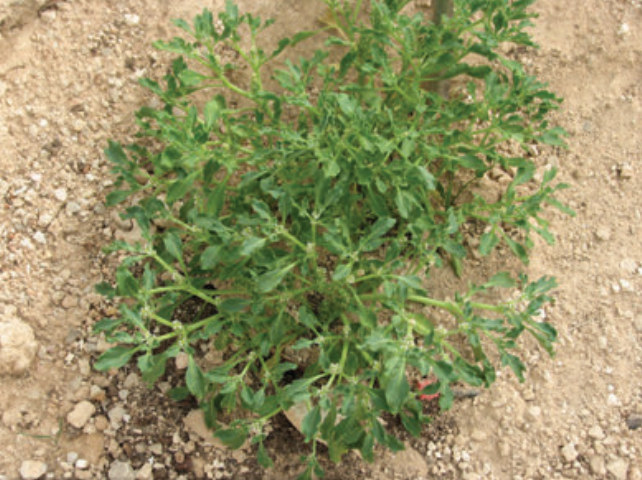
A perennial herb, covered with genus hairs, 20 cm long, becoming grayish, woody at the end of growth.
The stems are prostrate or ascending, dichotomously branched.
The leaves are simple, obovate spoon-shaped, tapering gradually to form leaf spoons, blunt or acute apex, toothed but widely spaced, 1.5 cm x 3.5 cm, sometimes even smaller.
The inflorescences are subspis, branched, short, set on branches and covered with leaves, elongating after fruiting.
The flowers are small, white, pinnate to subpinnate.
The sepals are 4 mm long, covered with erect genus hairs, about 1-2 mm long and stiff.
The corolla has four petals, twice the length of the sepals, each petal consisting of a nail and a blade.
(Male: 6 mm) The female is bicarpel-bound, with 4+2 stamens in the superior ovary, and bistomous due to the formation of a false septum.
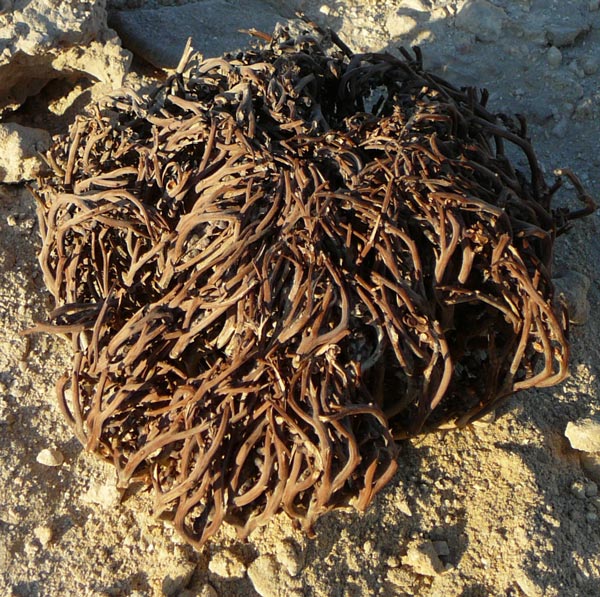
The branches of the fruiting inflorescence are woody and arching, forming a spherical body containing the fruit.
In humid conditions, the branches diverge, and the fruit is dispersed.
The fruit is a drupe, hard, unopened, ovoid, covered with genifoliate hairs, measuring 4-3 x 6 mm.
The two lobes are basal, each widening towards the apex to form a spoon-shaped capsule, measuring 4-3 x 6 mm.
The false septum is thick.
The seeds are tucked down, 5 mm in length (equal to or less than the length of the hard stamen, which is wing-length), compressed, ovoid, with one seed per stigma. Flowering occurs from February to April.
Used part
The dry plant, especially the leaves and fruits
chemical components
The plant contains: quercetin, quercetin, leucitin, isovitexin, isovitexin, luteolin (most importantly luteolin), flavonoids, sterols, sterol compounds, glucosinolates, glucosinolate, glucosinolate, glucosinolate, and kaempferol.
The fruits also contain sugars such as glucose, lactose, fructose, sucrose, and raffinose.
Properties and medical uses
A decoction of the powdered plant is popularly used to alleviate colds, labor pains, and to facilitate childbirth (the herb of labor), lower blood sugar, act as a strong laxative, and treat jaundice.
A tincture made from the herb is used topically to treat hemorrhoids, leprosy, and vitiligo, and the juice of the fresh leaves is used to treat eye diseases (conjunctivitis).
Side effects and precautions
Allergic reactions or drug interactions may occur; self-use should be avoided by pregnant and breastfeeding women, children, and patients with chronic diseases.
the environment
In valleys where it reaches - the plant grows on the slopes and stony plateaus of desert regions and on sandy soils.
Its annual rainfall reaches approximately [amount missing].
After the rainy season, the plant dries out, its leaves fall, and the branches bend and curl up, forming a ball.
The fruits remain suspended and closed inside the ball to protect the seeds and prevent premature dispersal.
When the wind-borne ball reaches a moist area or during the rainy season, it absorbs water, and the fruits split open, releasing their seeds.
If there is enough water, the seeds germinate within hours.
Some of the seeds are dispersed near the parent plant by raindrops.
The seed coat helps it adhere to the soil, and the seeds can also be carried by rainwater over greater distances, but their chances of survival are lower.
The plant can repeat this process multiple times as conditions allow.
Sometimes, the seeds can even germinate while still inside the fruit and within the curled, dead plant, giving the impression that the dead plant itself has returned to life.
Agriculture and productivity
The plant is propagated by seeds.
The seeds are highly resistant to extreme environmental conditions and can remain dormant for years.
It is recommended to collect the seeds and disperse them in nature for propagation.
History and Heritage
The word "anastasis" (from the Greek *anastatica*, meaning resurrection or rebirth) refers to the plant's ability to grow after dying when water is available.
It was mentioned by Ibn al-Baytar, al-Antaki, and Abu al-Qasim al-Ghassani under different names.
Arabs used the plant, especially its leaves and fruits, for medicinal purposes, such as to induce menstruation and to treat phlegm, headaches, and colds.
Medical note
This information is for educational purposes only and does not constitute medical advice.
Poisonous or potent plants should only be used under the supervision of a qualified physician or pharmacist.
Related images