Black mustard | Medicinal plant in the Akhdar encyclopedia
The seeds and essential oil possess antiseptic and antibacterial properties, inhibiting the growth of bacteria and fungi. It reaches various body cells, and studies have confirmed its properties. Mustard also possesses properties that aid blood flow and soothe the skin. Black and white mustard oil…
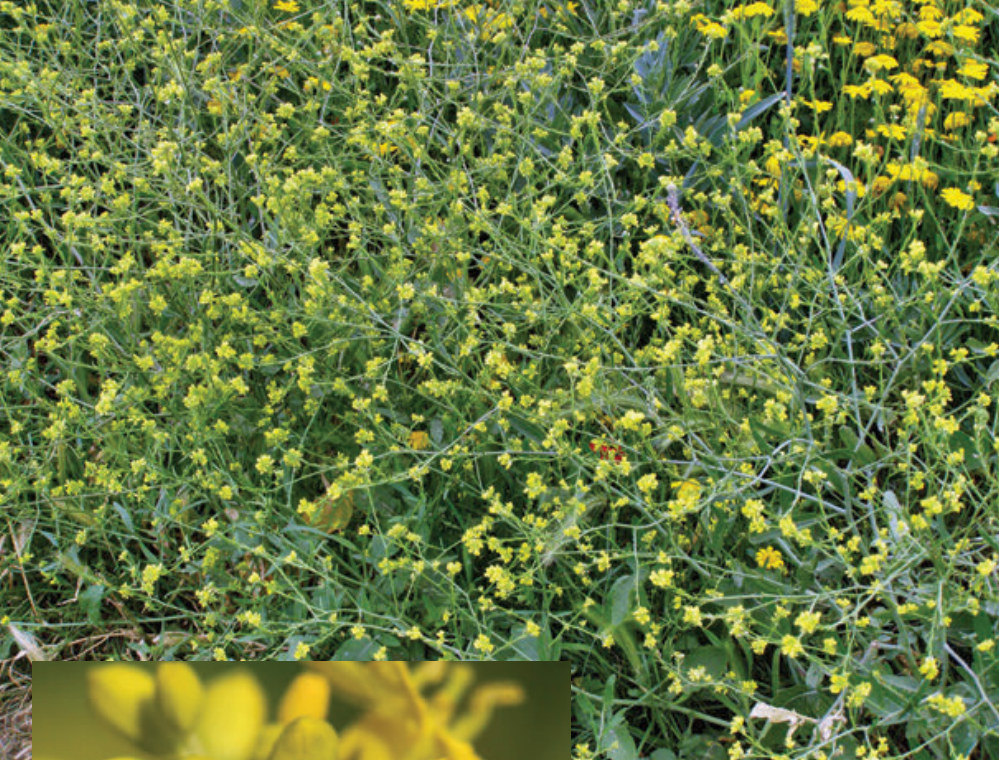
Plant name
black mustard
Latin name
Brassica nigra (L.) Koch
Common names
Black mustard, mustard seed, mustard seed
foreign names
Eng. Black mustard, Fr. Moutarde noire
The group
cabbage
Habitat and Geographic Distribution
It is Mediterranean.
It spreads naturally in southern Europe, Siberia, and Central Europe, and is cultivated in temperate regions of Europe, Asia, and Africa.
Botanical description
150 cm - An erect, biennial herb with slender branches, the lower part bearing coarse hairs, spindle-shaped roots.
The lower leaves are long-petioled, downy, 40 cm long, deeply lobed, with the terminal lobe being the most prominent.
The upper leaves are short-petioled, smaller, with a lanceolate base, uterine, glabrous, slightly toothed, the terminal leaves often being smooth and entire.
The flowers are gathered in terminal or axillary inflorescences, condensing to form semicircular clusters.
The sepals are four, the length of the petals is four, yellow, twice the length of the calyx.
The male flowers are six.
The ovary is bicarpate, divided into 4+2 stamens of varying lengths by a false septum.
The fruit is an erect mustard seed pod, attached to the stem, cylindrical, 6 mm long, and its stalk is 3 mm long and rough.
The seeds are 5 mm long, straight, with a narrow, seedless head.
They are 2 mm long, spherical, and brown.
Flowering occurs from May to September.
*B.
alba* L.
*Rabenh* (White Mustard) is similar to black mustard in its chemical composition and uses.
Used part
seeds and their essential oil
chemical components
The composition of B.
alba varies depending on the species.
White mustard seeds contain glucosinolates, while black mustard seeds contain sinigrin glycosides.
These compounds are hydrolyzed by enzymes, including allyl isothiocyanate (1.3%), yielding a volatile oil rich in sterols.
The seeds also contain phenylpropan derivatives (including flavonoids), which are bitter-tasting amino acids.
The seeds are rich in sterols and contain fixed oil, fatty oil, mucilage, and mucilage.
They also contain phenylpropan derivatives and flavonoids (which are bitter-tasting amino acids).
Sinapin (mustard oil): The volatile mustard oil used medicinally is prepared by pressing or steam distillation of mustard seeds.
The oil is clear, colorless to yellowish, and has a sharp, tear-inducing, and abrasive odor.
Properties and medical uses
The seeds and essential oil possess antiseptic and antibacterial properties, inhibiting the growth of bacteria and fungi.
It reaches various body cells, and studies have confirmed its properties.
Mustard also possesses properties that aid blood flow and soothe the skin.
Black and white mustard oil are used to treat sinusitis, bronchitis, pleurisy, sciatica, and pleurisy.
A paste made from the ground seeds is traditionally used as a poultice to treat pneumonia, respiratory congestion, fluid retention, intestinal gas, muscle pain, arthritis, soft tissue inflammation, rheumatism, and gout.
A decoction of the seeds is used in body and foot baths, as a poultice to treat bruises, and as a gargle to treat inflammation of the mouth and throat.
Mustard oil is also used topically to stimulate blood circulation and treat vascular diseases, heart weakness, and pulmonary insufficiency.
pharmaceutical forms
Mustard is available in tea, ground seeds (mustard oil), and oil.
It is also available as salves and sold under names such as kiniments and salves.
Side effects and precautions
In the form of compresses, the volatile carbohydrate compounds, represented by allyl isothiocyanate, evaporate.
Using mustard oil can irritate the eyes and may lead to respiratory problems and asthma attacks when inhaled.
Mustard oil should not be inhaled or tasted undiluted, as it can cause poisoning.
A doctor should be consulted if allergic reactions or any irritation of the skin and mucous membranes occur as a result of contact with mustard or its oil.
The plant should be avoided by those with stomach ulcers or kidney inflammation.
Mustard oil should not be used internally by people suffering from stomach ulcers or kidney inflammation, as it may irritate the mucous membranes of the stomach and kidneys.
Hands should be washed thoroughly, and the eyes should be avoided after preparing medicinal products from mustard seeds. Mustard oil compresses should not be used for more than half an hour.
Other uses
The seeds or paste are used in spices as an appetite stimulant.
the environment
Black mustard adapts to varying climatic conditions; it tolerates cold but prefers a temperate, dry climate and does not tolerate high humidity.
It is tolerant of lime and grows readily in many soil types except heavy clay soils, preferring deep, fertile, moist, and well-drained light sandy soils.
Agriculture and productivity
Black mustard is cultivated for its edible seeds.
It is propagated by seeds sown directly in the permanent field or by seedlings planted after rainfall in autumn or early winter, spaced 3x6 cm apart.
The seeds are sown in beds or basins measuring 20 cm in length, and germination takes more than a week.
The seedlings are transplanted to the permanent field in spring and rarely require watering except immediately after transplanting.
The plants are fertilized and watered according to the plant's needs and growing conditions.
The seeds fall from the pods when they open.
It is preferable to begin harvesting as soon as the fruits turn yellow and before they open, taking care to harvest in the early morning. One hectare produces 1.5 tons of seeds.
History and Heritage
Brassic or bresic is the scientific name for the genus, derived from the Celtic word meaning "cabbage," and is the ancient Latin name for these species, meaning "black." Nigra is the species name.
Both black and white mustard varieties have been used medicinally and culinarily for a long time.
Medical note
This information is for educational purposes only and does not constitute medical advice.
Poisonous or potent plants should only be used under the supervision of a qualified physician or pharmacist.
Related images


