Mexican tea | A medicinal plant in the Akhdar encyclopedia
The plant possesses toxic properties, particularly due to the compound ascaridole. It was once used to treat roundworms and hookworms, but its use has declined due to the availability of many safer alternatives. The seeds and leaves of the plant are used in South American folk medicine to treat ast…
Plant name
Mexican tea
Latin name
Chenopodium ambrosioides L
Common names
Mexican tea, zebrawort, and wormwood
foreign names
Eng. Wormseed Oil, Fr. Anserine
The group
The official
Habitat and Geographic Distribution
The plant is native to Central and South America, from where it spread to most parts of the world.
The United States is a major producer of the plant and its oil, followed by India.
Botanical description
cm.
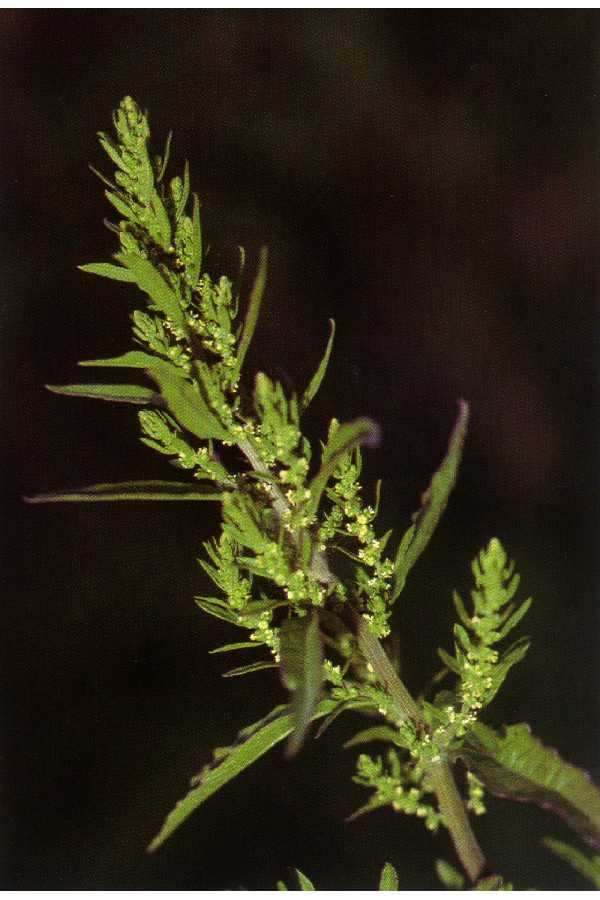
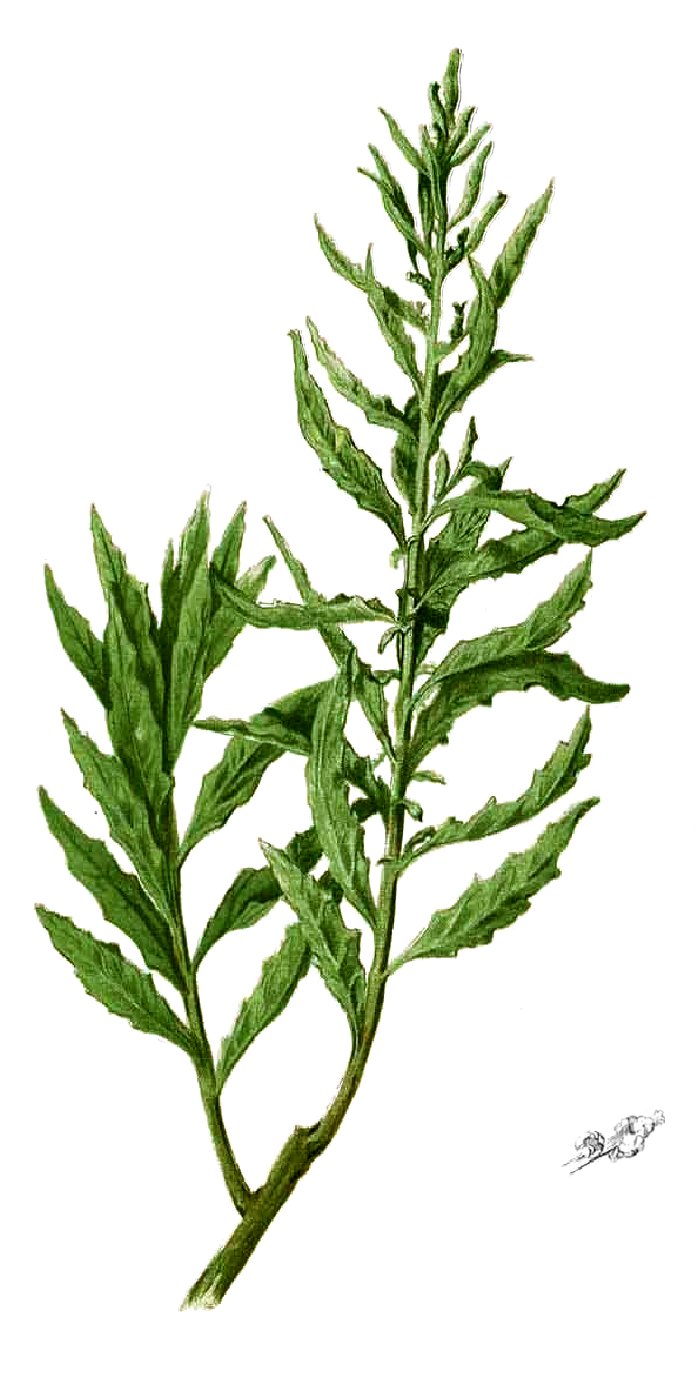
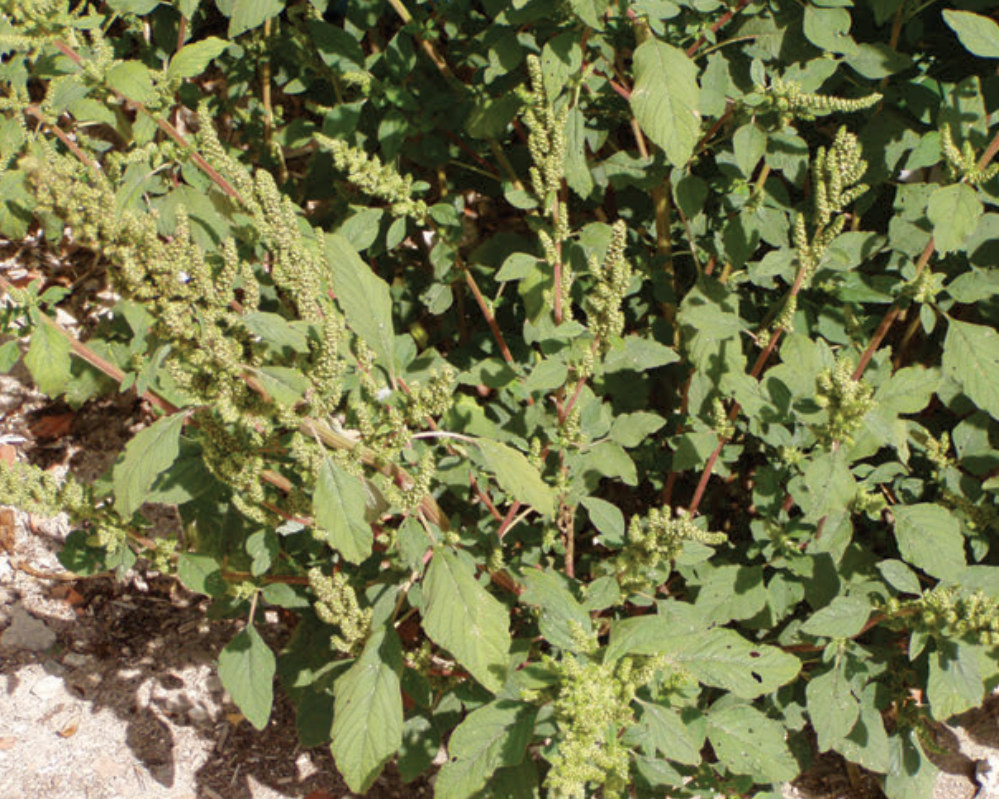
Stem erect, simple or branched.
90 - downy, aromatic, long - perennial or biennial herb, velvety, toothed, upper leaves entire, all bearing yellowish glands - leaves breve-petioled, oblong to uterine, sinusoidal on the underside.
Flowers hermaphroditic, green, gathered in dense clusters and forming elongated spikes: placed in a glandular cluster.
-, free or joined at their bases, velvety 5 - mm, includes the fruit, segment 1.5 long, leafy.
The calyx is simple, about stamens long.
Female: two carpels, superior ovary, solitary.
Fruit: umbel. Seeds: horizontal, luminal. 5 - Male: flowering from March to early October
Used part
seeds, leaves
chemical components
Gittaria is known as "Cynopodium oil." The seeds contain a yellow volatile oil, comprising 0.6-1% alpha-terpenes, alpha-pinenes, p-cymene, and para-cymene.
Ascaridole is the most important component, along with butyric acid.
Additionally, the seeds contain a fatty oil, the most important components of which are butyric acid, L-pinocarvone, and limonene.
Properties and medical uses
The plant possesses toxic properties, particularly due to its ascaridole compound.
It was once used to treat roundworms (Ascaris and hookworms), but its use has declined due to the availability of many safer alternatives.
The seeds and leaves of the plant are used in South American folk medicine to treat asthma.
The oil is used in Chinese medicine to treat rheumatic arthritis, eczema, and uterine bleeding.
It has anti-inflammatory, analgesic, anthelmintic, antiparasitic, and immunomodulatory properties against various stages of schistosomiasis, reducing the granulomatous inflammatory appearance caused by the infection.
The plant's volatile oil is effective in reducing the parasite load and lesion size in BALB/c rats infected with Leishmania amazonens.
A C.
ambrosioides extract, at its lowest inhibitory concentration, was effective against Candida albicans.
The plant extracts have an anti-inflammatory effect against the larval stage of the intestinal nematode Haemonchus contortus, also known as poleworm.
They also possess anti-arthritis, acaricidal, anticancer, antioxidant, antidiabetic, antidiarrheal, infertility-enhancing, anti-leishmaniatic, anti-malarial, anti-ulcer, antipyretic, and anxiolytic properties.
Furthermore, they are insecticidal and molluscic, and aid in bone regeneration.
However, the plant is poisonous.
The lethal dose is estimated at around 10 mg for adults and less for children.
Ingestion may lead to damage to the nervous system in general, and hearing in particular.
This damage may persist for years; therefore, the plant is not recommended for use.
Side effects and precautions
Allergic reactions or drug interactions may occur; self-use should be avoided by pregnant and breastfeeding women, children, and patients with chronic diseases.
the environment
The plant grows wild in fields, neglected areas, and along the edges of pastures, drains, and roads.
*Zarbikh* is a summer-flowering plant from north to south of the equator.
It is a temperate, humid, and short-day plant located between the two latitudes.
Most soil types are suitable, but it prefers light soils rich in nitrogen.
It tolerates soil salinity and thrives at a pH of 5.2-8.3.
Cultivation and Productivity: The plant propagates easily from seed.
Seeds are scattered in the nursery bed at the beginning of spring.
Seedlings are transplanted to the permanent field at 10 cm.
At the end of spring, when they reach a height of 15 cm, the plant responds well to water.
Seedlings are planted in holes along the rows due to its high sulfur content.
For nitrogen fertilization, the plant is harvested by cutting above the soil surface when the seeds turn black and before the plant turns brown.
Delaying harvesting leads to fruit drop and significant crop loss. 60 kg of oil. The fruit produced per hectare yields approximately 900 kg.
Agriculture and productivity
The plant propagates easily from seeds. They are scattered.
History and Heritage
The name means "man," derived from the Greek word "podion," meaning "goose," and "chêne," the genus name meaning "goose foot," referring to the plant's resemblance to a goose's foot.
Native Americans used extracts of the plant, particularly to treat digestive ailments.
Introduced to Europe in 1900, it was one of the most important remedies used for expelling worms.
Interest in it increased during World War I, then declined after it was replaced by synthetic compounds.
Medical note
This information is for educational purposes only and does not constitute medical advice.
Poisonous or potent plants should only be used under the supervision of a qualified physician or pharmacist.
Related images