Onions | A medicinal plant in the Akhdar encyclopedia
Onions possess antibacterial properties, and their various compounds, including thiosulfinate, lower blood lipid levels, reducing atherosclerosis and high blood pressure. Studies have shown a decrease in the risk of stomach cancer, cholesterol, and triglycerides with increased onion consumption. Th…
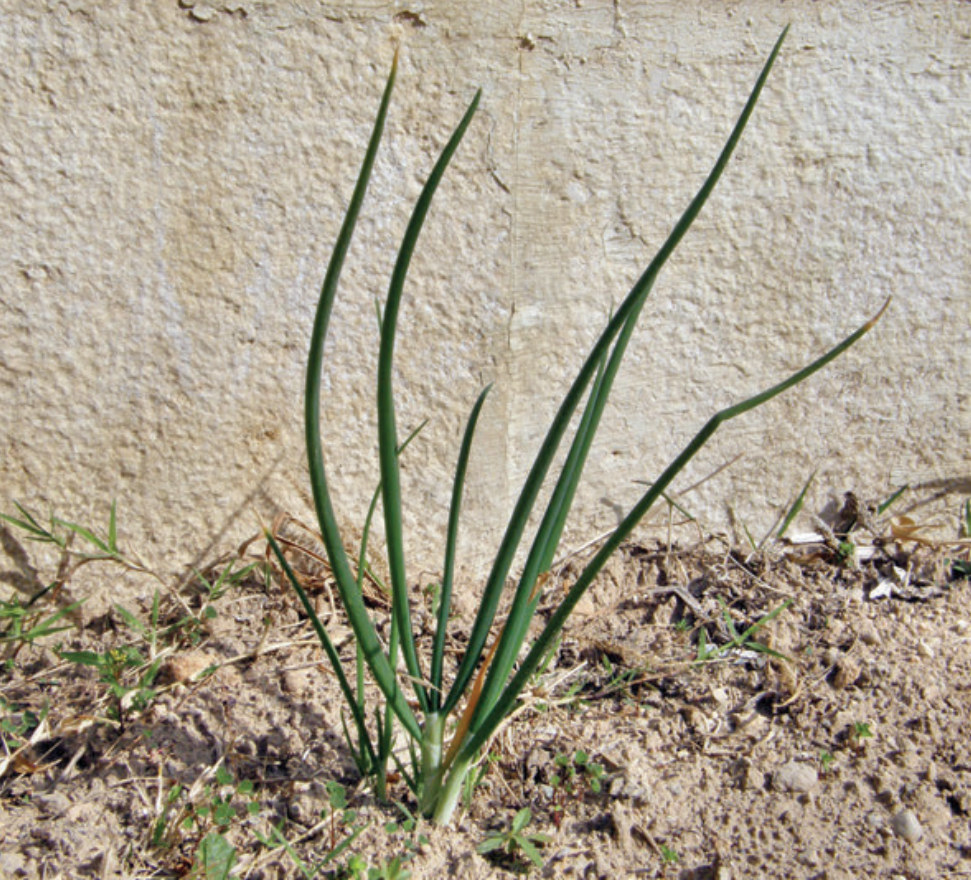
Plant name
onions
Latin name
Allium cepa L
Common names
onions
foreign names
Eng. Onion, Fr. Oignon
The group
onion
Habitat and Geographic Distribution
Syria is the original home of the onion plant, which is widely cultivated in many countries around the world. Syria and Cyprus are among the Arab countries that produce the most onions.
Botanical description
A perennial plant with bulbs that take on various shapes (spherical, oval, or oblong) depending on the variety.
The leaves are flattened from the inflorescence stalk, tubular or slightly flattened.
The stem is erect and slender, sometimes reaching a blue color, and bears the inflorescence at its end.
The slender stem is gray.
The leafless, spindle-shaped stem terminates in stamens arranged in spathes (6 cm in length), consisting of three flowers ranging from white to purple, with long pedicels (approximately two rhizomes, exceeding the spathes in length), and three fused carpels forming a trilobite ovary.
The flowers are gathered in a spherical umbel surrounded before opening by a large bract.
The fruit is a trilobite capsule containing black, angular seeds.
The bulb is an underground organ consisting of a flat, dwarf, disc-shaped stem with nipple-like leaf bases filled with storage, which are themselves surrounded by dry, scale-like leaves.
The disc-shaped stem produces a terminal bud that later gives rise to an aerial shoot, and on its lower part develop fibrous, adventitious roots.
Used part
onion
chemical components
Onions contain alliins, a volatile oil that includes several carbohydrate compounds similar to alliin (responsible for hemolysis), thiopropionic acid (which decomposes to produce bactericidal compounds), and thiosulfinate aldehyde, as well as the compound responsible for eye health.
They also contain sucrose (40%), steroidal saponins, fructosanate sugars, quercetin, prostaglandins, flavonoids, and minerals such as sodium, potassium, calcium, magnesium, cobalt, vitamin C, vitamin A, protein, and phosphorus.
Properties and medical uses
Onions possess antibacterial properties, and their various compounds, including thiosulfinate, lower blood lipid levels, reduce atherosclerosis, and decrease high blood pressure.
Studies have shown a reduced risk of stomach cancer, cholesterol, and triglycerides with increased onion consumption.
The carbohydrate compounds in onion oil reduce platelet aggregation and slow blood clotting.
Onions are used to treat laryngitis, bronchitis, sinusitis, and respiratory infections caused by Bacillus subtilis.
They also eliminate harmful bacteria in the digestive system, particularly Pseudomonas aeruginosa, Escherichia coli, and Salmonella typhi.
Onions, or onion juice, are traditionally used to treat coughs, asthma, angina, tonsillitis, and to stimulate bile secretion in cases of digestive disorders.
They are also used to treat high blood pressure and atherosclerosis, lower blood sugar, and help eliminate intestinal worms.
Onion juice or its alcoholic tincture is used topically as an antiseptic for minor wounds and burns, and is beneficial in treating warts, boils, and abscesses, as well as being used to strengthen hair.
Side effects and precautions
Allergic reactions or drug interactions may occur; self-use should be avoided by pregnant and breastfeeding women, children, and patients with chronic diseases.
the environment
Onions require a certain amount of water (O26).
Onions are considered a drought-tolerant vegetable plant.
The ideal temperature for their growth is sufficient, especially during seed germination, vegetative growth, and bulb formation.
Bulbs tolerate drought during the maturation stage, but excessive moisture delays their ripening.
Onions need fertile, loose, and well-drained soil.
The ideal pH is 7.
Onions need suitable moisture retention due to their weak root system.
The ideal temperature is 7.
Onions should not develop flower stalks.
It is recommended to store bulbs at a temperature lower than 7.
Planting and productivity: Onions are propagated by seeds and small bulbs (such as rhizomes or canary seed).
Seeds are sown in trays of suitable dimensions.
Onion seeds are sown in autumn at appropriate humidity and temperature.
Onion seeds germinate during the 15-day period, but their germination rate is low.
Onion growth is very slow in its early stages, with the first true leaf appearing within a month of germination (5-15 days).
Leaf growth continues slowly until the plant forms seedlings.
Rapid leaf growth begins, and their number increases during the vegetative growth stage.
Bulb formation begins with swelling and enlargement of the leaf bases.
Small bulbs are harvested and planted in the field in autumn or spring in rows spaced 1 cm apart.
They receive the necessary care, including irrigation, fertilization, and weeding, until the bulbs swell and dry at the top, and their leaves wither above the top.
The bulbs are then harvested and dried. The yield per dunam of regular onions ranges between 2 and 3 tons.
History and Heritage
The ancient Latin word *Allium*, the scientific name for the genus, means "stinging" or "pungent," referring to the bulbous shape of the onion.
It is likely derived from the Latin word *cepa* or *cep*.
The species name means "head," referring to the bulb's shape.
Onions are a food and medicinal plant known since ancient times, and were familiar to ancient civilizations.
Wall paintings depicting them date back to 3000 BC.
The ancient Egyptians used onions, and it is said that they held a near-sacred status, even swearing by them.
They also wore onions as a talisman against the evil eye.
Onions were a staple food for the pyramid builders and were used to treat rheumatism and strengthen the heart.
They were also an ingredient in embalming materials.
The Greeks also held a high place in their culture; their physicians discussed and prescribed onions to treat various ailments, and Dioscorides used them to purify the blood.
The Chinese used onions as both food and medicine.
The Arabs were also well aware of the many benefits of onions.
Ibn al-Baytar said: "Onions stimulate the appetite, are soothing, thirst-quenching, and laxative.
When cooked, they are a stronger diuretic.
Roasted walnuts and fried lentils can eliminate the smell of onions." Al-Antaki said of onions: "They open blockages, cure jaundice, promote urination and menstruation, and dissolve kidney stones." Ibn Sina also recommended them for stimulating the appetite and treating weakness and emaciation.
Wild onions are found in Iran and are believed to have been cultivated there thousands of years ago, or possibly in Afghanistan before that.
Medical note
This information is for educational purposes only and does not constitute medical advice.
Poisonous or potent plants should only be used under the supervision of a qualified physician or pharmacist.
Related images


