Argan | A medicinal plant in the Akhdar encyclopedia
Cosmetically, argan oil possesses antioxidant properties (higher than those of olive oil) that help reduce the risk of cancer. Linalanolic acid, a component of argan oil, is involved in the synthesis of prostaglandins, which effectively increase the permeability of skin cells. Furthermore, argan oi…
Plant name
Argan
Latin name
Argania spinosa (L.) Skeels
Common names
Argan, Argan, Argan, Moroccan Tree of Life, Moroccan Almond
foreign names
Eng. Argan tree, Fr. Arganier
The group
Saputase
Habitat and Geographic Distribution
Morocco is the original home of the argan tree, where it is widespread in Beni Souira and Agadir in the Maghreb, and some of its communities are found in the north of a region characterized by dry and semi-dry climatic conditions and less annual rainfall than eastern Morocco in the Oujda region, and to a lesser extent in the Tindouf region of Algeria.
Botanical description
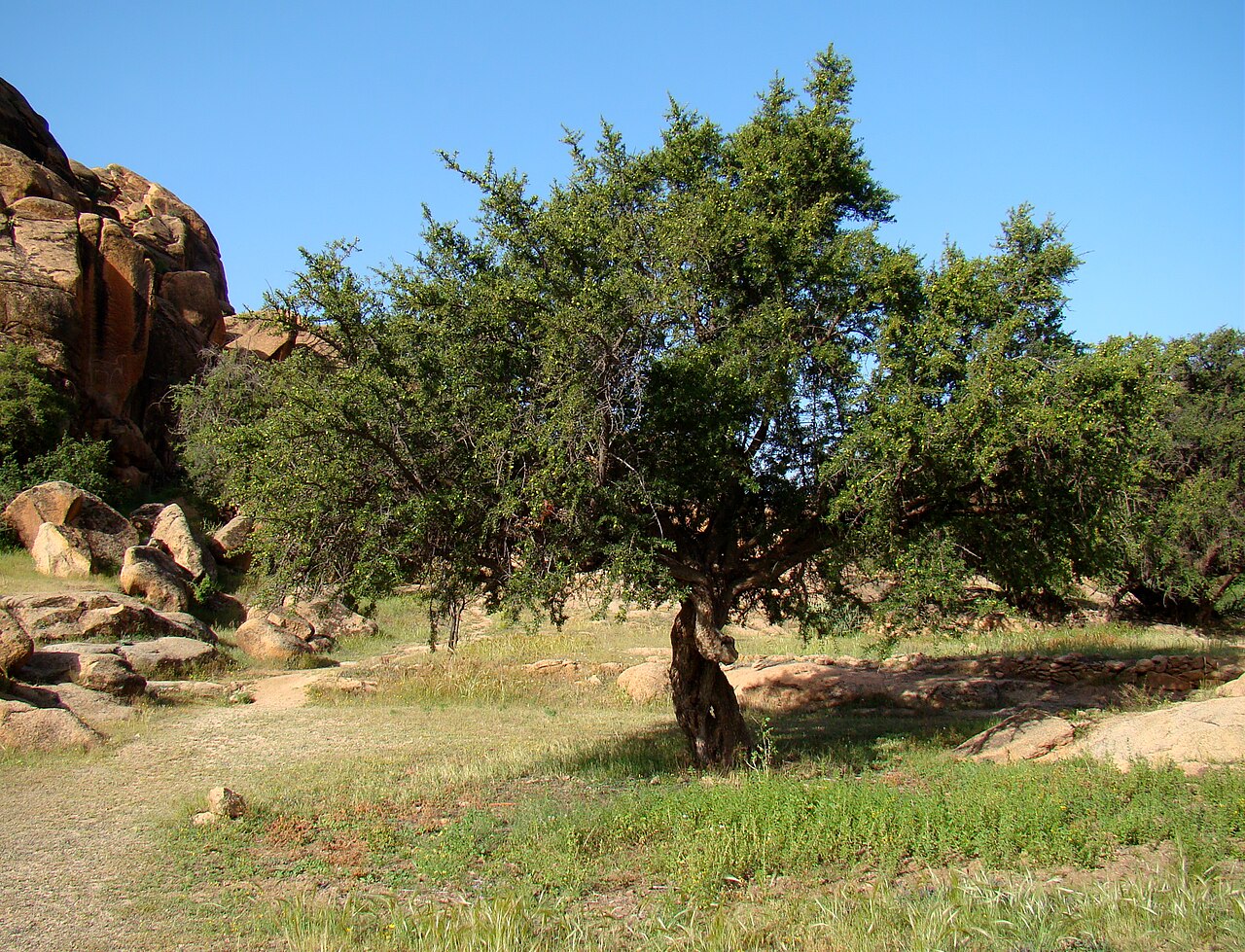
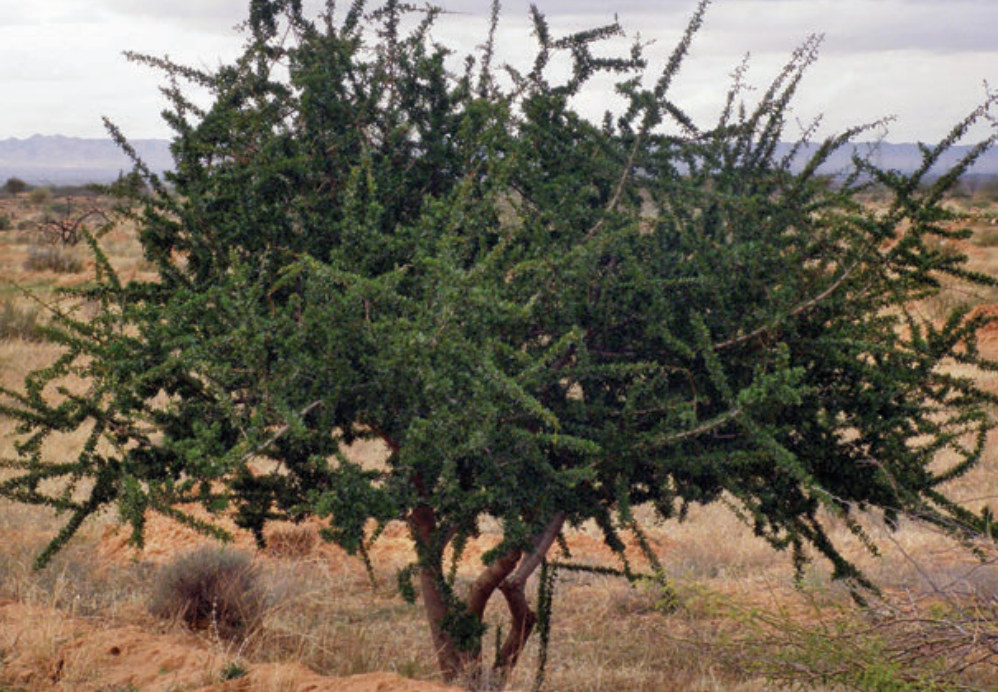
The crown is spherical and flattened, the bark is gray, fissured, and may reach 6 meters in height.
It is a slow-growing tree, reaching a height of 6 years.
The branches are numerous and thorny.
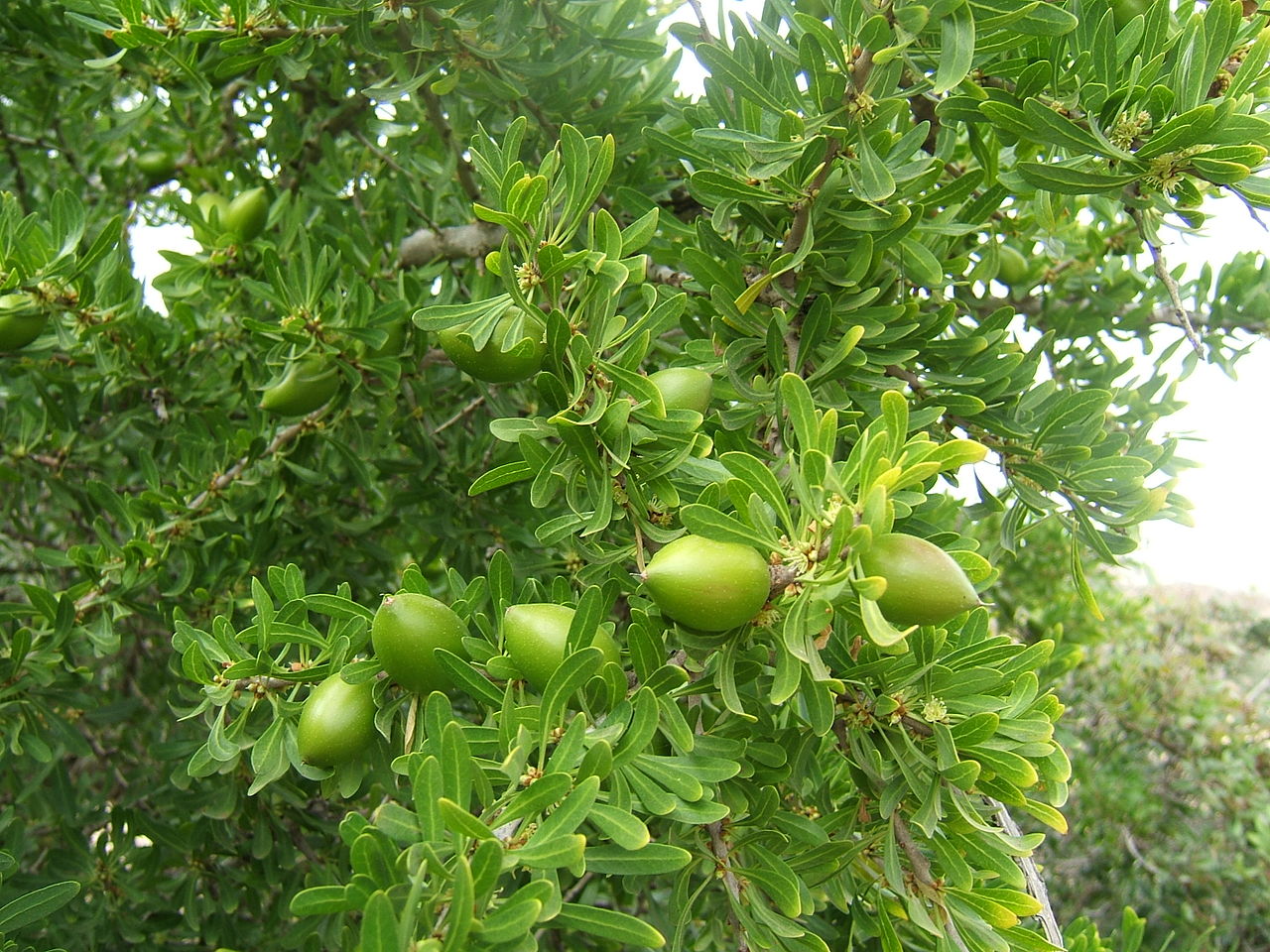
The leaves are simple, evergreen (they may fall off in cycles of 200 new shoots and live for 4 years and a long drought), semi-periwinkle, alternate, often clustered in bundles on very short branches, leathery, 1 cm long, obovate to uterine, with a dull apex.
The flowers are small, hermaphroditic, and clustered in small axillary globules.
The petals are pale yellow to reddish.
The sepals are hairy and fused at their bases.
The corolla is bell-shaped, composed of five male calyxes and five stamens (some of which may be fertile).
The ovary is superior, surmounted by a simple style.
The fruit is a drupe, yellow when ripe.
The average fruiting membrane is 1.5-3 cm thick and rough.
It resembles an olive, is thick, has a pungent aroma, but a pleasant, slightly greasy taste.
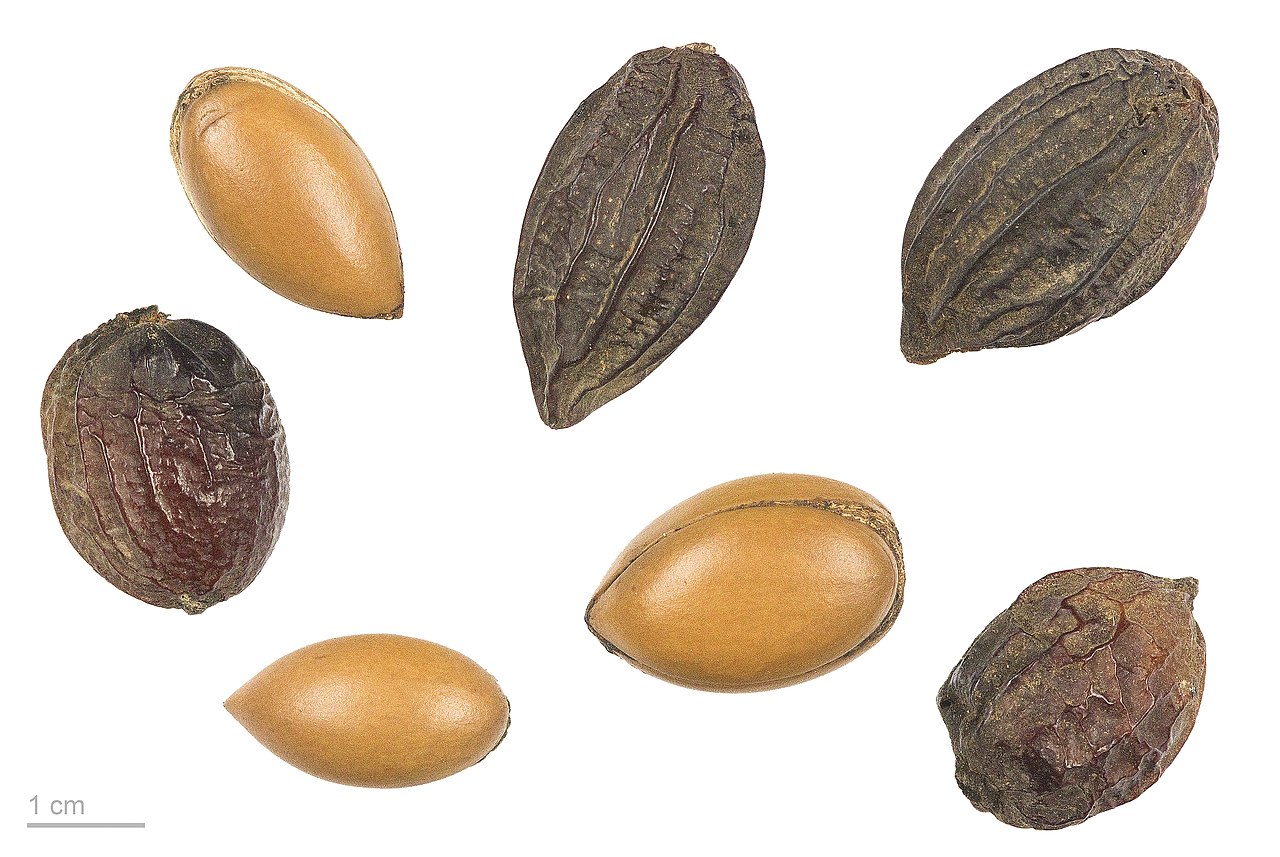
The inner membrane is hard and contains one, two, or three oil-rich seeds.
The fruit takes more than a year to mature, ripening from June to July of the following year. Flowering occurs from April to May.
Used part
Seed oil.
Oil production: Argan oil is extracted using traditional methods, beginning with farmers picking the ripe fruit from the tree or collecting the nuts excreted by goats and camels in their dung after eating the fruit.
The seeds are lightly roasted (preferably not roasted for cosmetic uses, to produce an odorless oil).
The seeds are then ground into a paste, kneaded, and cold-pressed to yield an edible oil with a reddish hue, darker than olive oil, and a taste similar to hazelnuts.
The economic value of argan oil: Argan oil is an important economic product in Morocco and has attracted the attention of many companies and consumers in several Western European countries, America, and Japan, due to its uses in diet foods and the manufacture of cosmetics and personal care products.
It is among the most expensive oils in the world, which has increased demand and driven the price per liter to $100.
chemical components
Argan seed oil contains beta-carotenes (which give it its reddish color).
It also contains vitamin E (45% of the seed weight), the most important of which are oleic acid (80%), linoleic acid (20-3%), linoleic acid (85%), and palmitic acid (12-13%).
It also contains unsaturated fatty acids, the most important of which are palmitic acid, tocopherol, and tocopherol sterol (1%).
In addition, it contains unsaponifiable compounds (5-7%), stearic acid, and tert-alcohols.
Unlike the fruit and wood of the argan tree, which contain saponins, argan seed oil does not contain any saponins.
Properties and medical uses
Argan oil possesses antioxidant properties (higher than those of olive oil) that help reduce the risk of cancer.
Linalanol, a component of argan oil, is involved in the synthesis of prostaglandins, which effectively increase the permeability of skin cells.
Furthermore, argan oil has benefits related to maintaining skin vitality and treating acne, burns, and skin cracks, most importantly by stimulating cell function through increased oxygen delivery.
- Stimulates enzymatic activity associated with the elimination of toxins and free radicals in skin cells responsible for skin aging.
(Vitamin A) Restores skin radiance, combats skin aging, and repairs skin cells.
(Vitamin B1) Nourishes, softens, and protects hair from damage.
In addition to strengthening nails, argan oil is currently used by international cosmetic laboratories in the manufacture of many preparations in the form of balms, moisturizing creams, massage oils, and transparent glycerin soaps.
The oil is popularly used as an anti-inflammatory, antibacterial, and analgesic, and is used topically to treat minor wounds and scars resulting from acne and chickenpox.
Moroccan women use argan oil to shine their hair and give it a beautiful appearance.
Food uses: Argan oil, with its nutty aroma, is used in food much like olive oil.
Its lack of cholesterol makes it beneficial in diets aimed at lowering cholesterol levels, protecting the heart and lungs, and strengthening the body's defenses.
General.
In Morocco, oil is used to: add flavor to couscous, salads, vegetables, meat, and fish dishes.
Side effects and precautions
Allergic reactions or drug interactions may occur; self-use should be avoided by pregnant and breastfeeding women, children, and patients with chronic diseases.
the environment
The argan tree thrives in semi-arid and desert bioclimatic zones.
It prefers areas with mild winters or a 7 mm/year interval.
It is not affected by the chemical properties of the argan tree and tolerates hot climates, surviving on less than average annual rainfall.
However, poorly drained argan trees are negatively impacted by their environment.
They are tolerant of wind and desertification, but are affected by sand encroachment.
Agriculture and productivity
The tree was on the verge of extinction due to overgrazing and illegal logging by local residents, but currently, the Moroccan government is making efforts to preserve it.
Argan trees are difficult to propagate, whether by seed or vegetatively, and few large-scale propagation experiments have been conducted.
Numerous attempts have been made to cultivate them in many countries, such as Tunisia, Libya, and more recently, in the Arabian Gulf.
Seed propagation presents the greatest challenge, as germination rates remain low.
Regardless of the treatment, the seedlings remain in viability.
It is generally recommended to pre-treat the seeds for up to three months and then treat them with gerbilic acid.
Argan propagation under controlled conditions: within a medium containing soil/materials (Habibah et al., 2008).
Recent experiments indicate that this method yielded the best germination rates and optimal conditions in plastic containers 1/1/2 the depth of which were decaying plant matter/humus, also contributing to the initial growth of seedlings.
The tree produces approximately 5 kg of fruit annually after 15 years, and bears fruit at a certain age.
History and Heritage
The culinary uses of argan oil (Argania spinosa) have been known for centuries.
The name "argan" itself is of unknown origin and refers to a tree, meaning thorny.
It was described in the writings of Ibn al-Baytar. As for the descriptive poison of the species...
Medical note
This information is for educational purposes only and does not constitute medical advice.
Poisonous or potent plants should only be used under the supervision of a qualified physician or pharmacist.
Related images