Robotic Agriculture: The Next Agricultural Revolution | Agricultural Technology - Akhdar
It seems that robot manufacturers and developers will not rest easy until robots are present in every field and activity of daily life, and walk among us, as depicted in the 2004 American science fiction film "I, Robot," starring Will Smith and directed by the Australian-born Egyptian director Alex…

Introduction to robotic agriculture
It seems that the manufacturers and developers of robots and their software will not be satisfied or happy until robots are present in every field and activity of daily life, and also walk among us, as in the American science fiction film “I, Robot” in 2004, starring American actor Will Smith, and directed by Australian-born Egyptian director Alex Proyas, based on a collection of short science fiction stories of the same title, first published in 1950, by the Russian-born American science fiction writer Isaac Asimov (1920-1992), where robots take over in all fields, work in various professions and jobs, and perform most human services and activities.
In the past decade, robot production was limited to types that perform some simple tasks, but in the current era, with the rapid developments in robotics science and technology, where robots have acquired high capabilities and skills, most factories in developed countries have turned to replacing skilled workers with robots, given that these advanced robots reduce costs and improve performance.
They work more accurately and quickly than humans, without wages, fatigue, boredom, absence from work, and other excuses and complaints that accompany human labor.
Recently, robots have begun to make their way into the field of agriculture.
In the American state of California, where lettuce is a major crop, representing more than 70 percent of all lettuce grown in America, Earthbound Farm, one of the largest organic farms in America, is currently using robotic systems from Adept Technology, based in Pleasanton, California.
The robots accurately and skillfully pack and wrap bundles of lettuce and send them to conveyors.
Each of these robots can replace five workers.
According to a December 4, 2012, article on www.roboticbusinessreview.com, Joe Torquato, Engineering Manager at Earthbound Farm, stated, “We researched many suppliers of robotic systems and found that Adept was the only company with suitable robotic products.
Our robotic packaging systems improve productivity, helping us to continue growing and developing.
This robotic technology is very precise and fast, and it handles the product more gently than human workers, reducing potential damage.
It also helps improve our working environment by eliminating repetitive tasks and saving on labor costs.” Will Daniels, Senior Vice President of Operations and Safety at Earthbound, added, “Adept’s robotic operating systems are designed with public health in mind, effectively supporting a healthy process and resulting in a safe and clean product.” The "lettuce bot" is just one of many robots being manufactured and developed to automate all aspects of agriculture and horticulture.
For example, the Vineland Research and Innovation Centre in Ontario, Canada, is currently working on three robotic agricultural projects as part of its Robotics and Automation program.
These projects aim to reduce production costs and minimize repetitive tasks.
One project focuses on developing a robot for planting tulip bulbs and repotting seedlings, another on harvesting, pruning, and packaging mushrooms, and a third on packaging potted plants.
Additionally, the agricultural harvesting robot, Vehicle HV-100, known as "Harvey," designed by Harvest Automation, a Massachusetts-based company, is designed to transport potted shrubs and trees around nurseries.
Blue River Technology, a Mountain View, California-based startup founded in May 2011, is developing an agricultural robot slated for release in 2013.
This new robot can identify weeds in lettuce fields and kill them using a dose of fertilizer.
Future versions of the robot will be able to pull weeds out by the roots, just like a human, without the use of herbicides.
According to a September 12th article on www.technewsdaily.com, Blue River co-founder and weed-removing robot engineer George Heraud stated, "The goal of this robot is to eliminate both the use of herbicides and manual weeding, as the costs of each contribute to the rising price of organic food." He adds that "the new robot relies on three sets of computer instructions to complete its task.
The robot uses cameras to scan the ground, and at the same time, a computer vision algorithm identifies plants.
The algorithm is a series of logical, sequential mathematical steps through which the robot is able to distinguish between two plants next to each other.
The robot is also capable of learning a large number of operations and learned examples, known as machine learning.
The robot was taught to identify which plants are weeds and which are lettuce plants, through an initial robotic model that was passed over lettuce fields and images were taken for training.
The algorithm's discrimination accuracy reached about 98 or 99 percent, and the robot is also able to kill weeds while moving." Despite the promising prospects for robots in industry and agriculture, there are significant concerns about their potential negative impact on the workforce.
This raises questions about the future of human labor in light of the rapid advancements in robot design and development, suggesting that humans may become more of an assistant to robots than the other way around.
Furthermore, if robots were to malfunction and become uncontrollable, they could cause serious harm.
Therefore, many countries have begun enacting legislation to protect humans from the increasing prevalence of robots.
For example, the Japanese Ministry of Economy, Trade and Industry has issued its first set of regulations for future generations of robots.
These regulations stipulate that robots will be programmed to avoid harming humans and to distinguish between hard and soft objects, ensuring the highest levels of safety.
Future generations of robots will also be equipped with emergency buttons to be activated if a robot goes out of control, preventing any harm to humans.
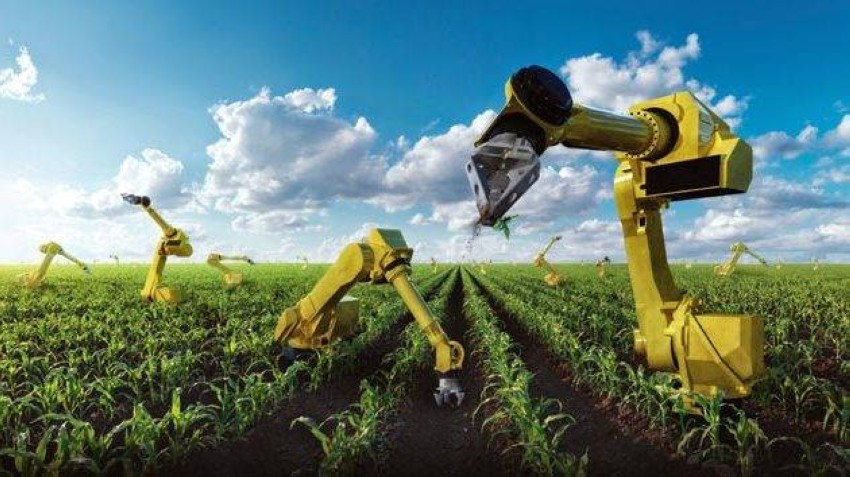
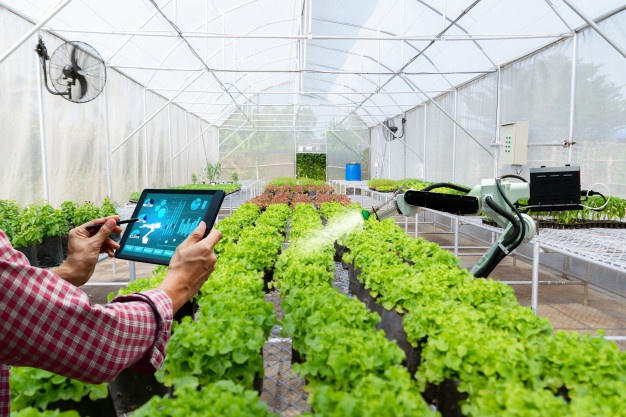
Robotic agriculture is a modern technology that utilizes automated robots to improve agricultural productivity.
These robots can perform several tasks such as farming, irrigation, and harvesting, saving a lot of time and human effort.
Technologies used in robotic agriculture
Robotic agriculture relies on several technologies, including artificial intelligence, machine learning, and automation.
Robots use advanced sensors to analyze the soil and determine crop requirements, performing tasks with high precision and efficiency.
Benefits of robotic agriculture
Robotic agriculture offers numerous benefits, such as reducing the need for manual labor, improving resource efficiency, and increasing overall agricultural productivity. It also helps protect the environment by reducing the use of chemicals.
Challenges and the future
Robotic agriculture faces several challenges, including the high cost of technological infrastructure and the need to train farmers in its use.
However, with continued technological advancements, these robots are expected to become more integrated into the agricultural process.
Section 5
In conclusion, robotic agriculture is considered one of the important developments in the field of agriculture, which promises a radical change in the way agricultural production is managed and increases its efficiency sustainably.
Related images