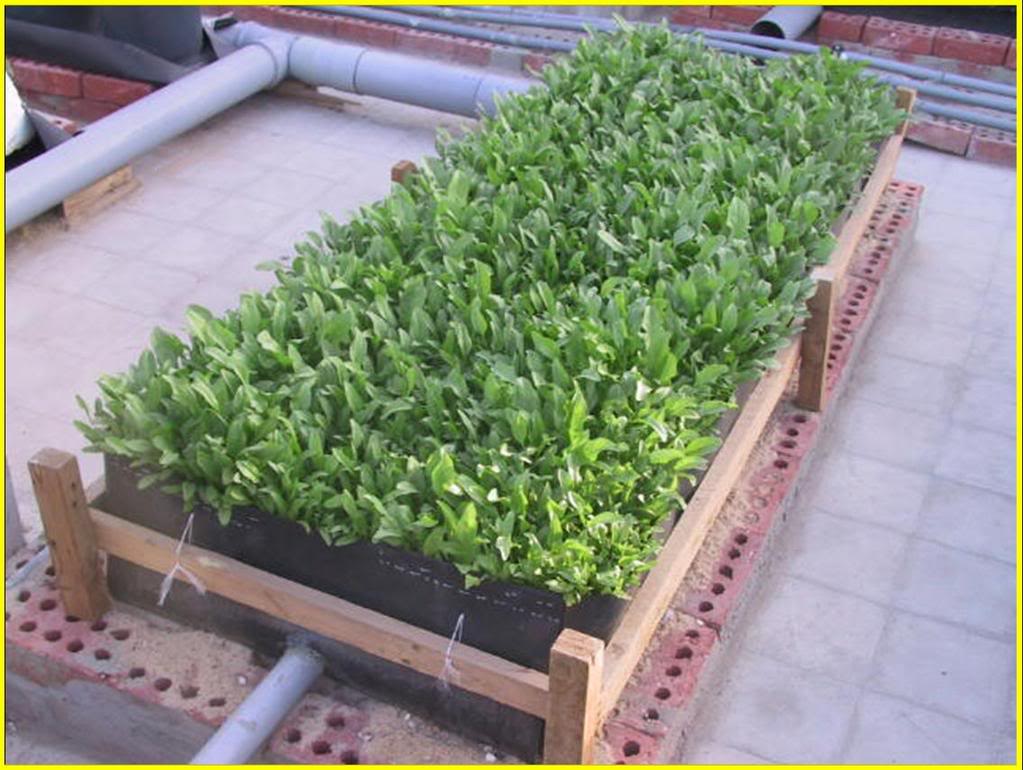
Rooftop farming: An innovative solution for small spaces | Agricultural Technology - Akhdar
Rooftop farming achieves several goals, most importantly environmental goals, which include: reducing environmental pollution caused by the shrinking of green spaces and the expansion of areas allocated to buildings and facilities; and purifying the air, as it has been found that every (1 m²) of Ak…

Introduction to rooftop farming
Rooftop farming achieves several goals, most importantly: environmental goals, which include: reducing environmental pollution caused by the shrinking of green spaces and the expansion of areas allocated to buildings and facilities; purifying the air, as it has been found that every 1 m² of Akhdar rooftop removes 10 grams of air pollutants annually, contributing to reduced air pollution and providing cleaner air, thus reducing respiratory diseases; preserving the aesthetic appearance of buildings by removing any accumulated waste from the rooftop and reducing the risk of fires; reducing carbon dioxide (CO2) in the air through its consumption in photosynthesis by plants; increasing oxygen levels, as every 1.5 m² of Akhdar rooftop produces enough oxygen for one person for a whole year; producing natural vegetables free of any fertilizers or chemical components, thus increasing their health benefits; protecting public health by producing fresh food for residents of remote areas suffering from a scarcity of such materials; achieving family self-sufficiency, rationalizing expenses and consumption, and building an ideal family economy.
Social Objectives: To provide permanent or temporary job opportunities for recent graduates, enabling them to meet their financial needs, or for housewives and the elderly, thus reducing their loneliness and filling their time with useful, enjoyable, and income-generating work.
To obtain healthy, safe, and guaranteed food under family supervision.
To increase the cultivated area using intensive systems to multiply production.
To utilize empty spaces on rooftops and convert them into vegetable or ornamental plant production.
To give rooftops beautiful and aesthetically pleasing views that soothe the soul and delight the eye.
To promote a culture of planting, cultivation, and environmental preservation, and to raise awareness of its importance.
To provide a significant portion of the family income; families can use rooftop farming to cover part of their financial needs, or to transform it into a small or medium-sized enterprise, thus adding a new source of income for the family.
Economic Objectives: To utilize rooftops for producing fresh vegetables or ornamental plants for personal consumption or for sale.
To provide job opportunities for housewives and unemployed youth, enabling them to earn an income.
Utilizing land for cultivating staple crops like wheat and transforming vegetable farming into a family activity.
Improving the surrounding environment by reducing carbon dioxide emissions and thus lowering environmental pollution.
Conditions for the success of a rooftop farming project: Choosing the right location for the crop; fruiting vegetables (peppers, tomatoes, cucumbers) need 8 to 10 hours of sunlight daily, while leafy vegetables need at least 4 to 5 hours daily.
The rooftop must be thoroughly cleaned well in advance of planting to ensure the absence of insects and rodents, and to remove any debris that might obstruct sunlight from reaching the plants.
Selecting a suitable farming system, whether simple or intensive, depending on the product's needs.
If sufficient experience is lacking, simple systems should be used to avoid significant losses.
The most important types of rooftop farming are: hydroponics (soilless farming), growing media, and aeroponics.
Rooftop farming systems include: growing media, growing on raised beds (wooden beds, plastic beds, rice straw bales), and growing in plastic bags.
Growing using plastic pots or buckets.
Growing using plastic pipes.
Growing using plastic barrels.
Growing using nutrient solutions: Growing in pipes attached to a wall.
Growing in water tanks.
Growing in plastic trays.
The most important conditions that must be met in the growing environment: Water retention capacity.
Proper ventilation.
Choosing the appropriate angle of sunlight for each plant.
Providing support for the plants.
The absence of harmful or toxic substances in the soil components or organic matter used for rooftop gardening.
Regularly removing opportunistic and crowding weeds.
Watering sparingly to prevent soil rot.
Rooftop gardening is an innovative idea that relies on utilizing empty rooftops of buildings to implement small agricultural projects.
This type of agriculture helps provide local food and reduces the use of traditional agricultural land.
Rooftop farming techniques
Rooftop farming relies on multiple technologies such as hydroponics and drip irrigation, as these technologies provide an ideal environment for plants to grow effectively in limited spaces.
Benefits of rooftop farming
Rooftop farming offers numerous benefits, such as improving air quality, reducing electricity bills through thermal insulation, and increasing biodiversity in urban areas. It also helps reduce carbon emissions and improve the overall environment.
Challenges and future trends
Despite its numerous benefits, rooftop farming faces challenges such as high initial costs and difficulty adapting to varying environmental conditions.
However, its success is expected to increase in the future as technology advances and rooftop use expands in cities.
Section 5
In conclusion, rooftop farming represents an innovative solution to the problem of limited space in cities, as it provides a suitable environment for sustainable agricultural growth and enhances food security in urban areas.
Related images