Irrigation Techniques: Developing Sustainable Agriculture | Agricultural Technology - Akhdar
Modern irrigation systems are designed to deliver water more efficiently and effectively than traditional irrigation systems. These systems rely on modern irrigation engineering principles to distribute water more precisely to crops or plants. There are many types of modern irrigation systems, but…
Introduction to Irrigation Techniques
Modern irrigation systems are designed to deliver water more efficiently and effectively than traditional irrigation systems.
These systems rely on modern irrigation engineering principles to distribute water more precisely to crops or plants.
There are many types of modern irrigation systems, but some of the most common include: Drip irrigation: This system delivers water directly to the roots of plants, reducing evaporation and soil loss.
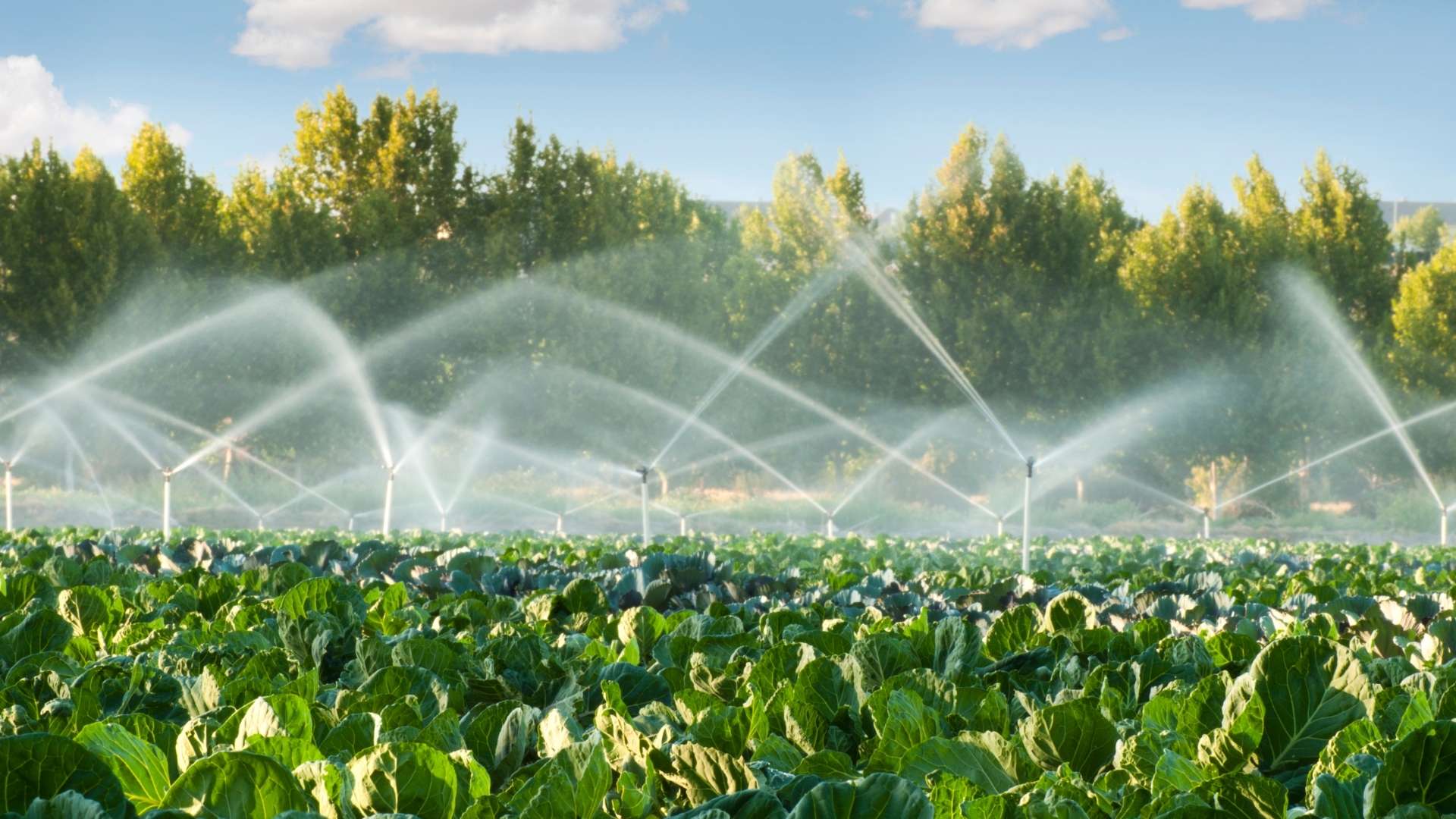
Sprinkler irrigation: This system sprays water into the air, allowing for even distribution over a larger area.
Surface irrigation: This system spreads water across the soil surface, allowing it to be absorbed by plant roots.
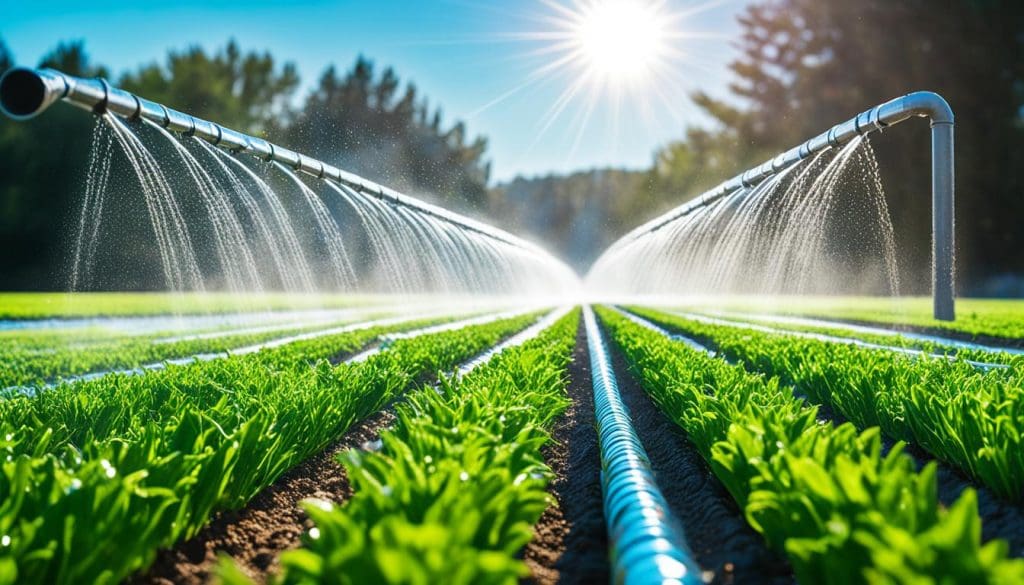
Bubble irrigation: This system delivers water through small pipes with tiny holes, allowing it to be released as bubbles.
Modern irrigation systems offer several advantages over traditional irrigation systems, including: Higher water efficiency: Modern irrigation systems can save up to 50% of water compared to traditional irrigation systems.
Higher crop yields: Modern irrigation systems can increase crop yields by up to 30%.
Improved soil quality: Modern irrigation systems can help improve soil quality by reducing water evaporation and soil loss.
Modern irrigation systems are widely used around the world and are essential for conserving water resources and increasing crop yields.
Modern irrigation technologies contribute significantly to improving water use efficiency and boosting agricultural productivity.
These technologies rely on integrating advanced technology with natural resource management to minimize waste and ensure water is supplied at the right time and place.
Key technologies in smart irrigation
Irrigation methods are divided into two main types: traditional methods, where the farmer draws water himself or uses pumps or animals from wells or canals and transports and distributes it using simple, rudimentary methods.
These methods are characterized by their low cost, but their efficiency is low due to poor water distribution among plants and significant water loss.
Modern methods are primarily adopted to avoid the water waste problems of traditional methods.
They rely on transporting water to plants using tightly sealed pipes that minimize water loss.
These methods include two main systems: sprinkler irrigation and drip irrigation.
All types of irrigation currently used can be classified, to some extent, into these two main irrigation methods.
One of the following types of irrigation is often used: surface irrigation.
Surface irrigation relies on transferring water from its source (usually elevated) to the plants above the soil surface by surface runoff.
In some cases, pumps are required if the water source is lower than the land where the plants are grown.
Surface channels or furrows are typically dug to channel water to the agricultural land, from where it is distributed to the plants as shallow furrows between rows of annuals or as rings around tree trunks.
This is considered a primitive irrigation practice, and its drawbacks include water wastage through evaporation or seepage into the soil as it travels to reach the plants.
Its efficiency is related to soil type; in homogeneous soils with low permeability, surface irrigation can achieve up to 90% of the efficiency of modern methods.
Flood irrigation is considered a type of surface irrigation, similar to the latter in that it is a primitive method and one of the oldest irrigation techniques.
It is usually applied in areas rich in surface water near rivers, streams, and waterways.
This technique differs from the previous one in that it does not rely on transporting water and irrigating crops through specific channels or waterways within the land.
Instead, it relies on completely flooding the land with water for a period of time, allowing it to penetrate the soil and reach the root zone.
The amount of water wasted in this type of irrigation is greater than in any other, and it also results in problems such as soil salinization and nutrient leaching.
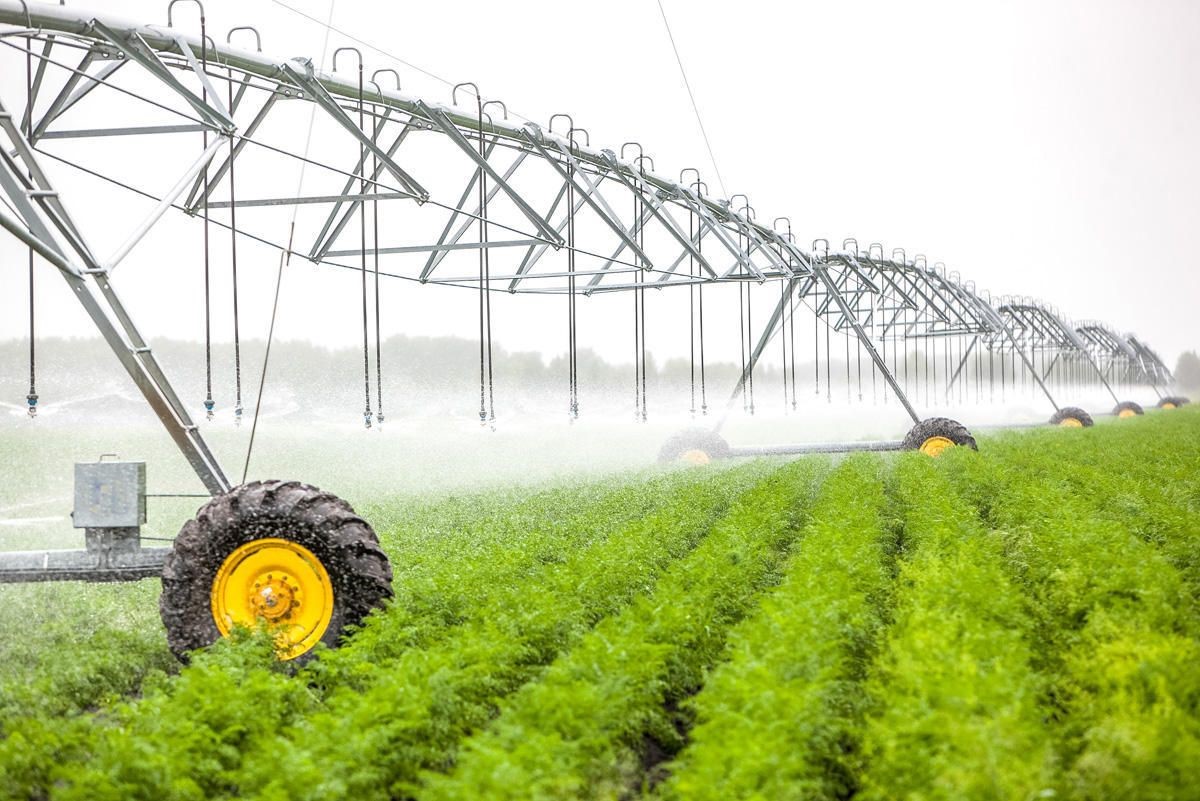
Sprinkler irrigation is considered a modern irrigation method.
It relies on delivering water to the field via a main hose that branches underground into secondary branches, each ending in a sprinkler (a device that sprays water onto the surrounding area in the form of a fine mist).
The sprinklers are distributed across the field to cover the entire area, somewhat mimicking rainfall.
The pipes are usually buried below the soil surface, leaving only the sprinklers visible.
This method is used to irrigate crops, some orchards, and lawns in public parks, playgrounds, and other areas.
A drawback of this method is water loss through evaporation.
In the case of strong winds in the area, the water distribution is disrupted as the wind carries the water away.
Furthermore, it increases the humidity of the aerial parts of plants, thus increasing the spread of fungal diseases that generally thrive in humid environments.
Drip irrigation, also known as micro-irrigation or low-volume irrigation, is a modern and highly efficient method that saves water and offers numerous advantages.
This method delivers water directly to the plant at the root zone through a network of branch pipes.
These pipes have precisely designed openings at fixed and carefully calculated intervals to suit the plants being cultivated.
One or more openings are placed at each plant to ensure water reaches the root zone with minimal waste.
This technique is used in greenhouses and for growing various crops, such as vegetables.
The pipes are laid along the planting rows, with one or two openings for each plant.
It is also used in orchards and fruit trees.
Branch pipes are laid in pairs along each row of trees, with the two pipes spaced apart near the tree trunk and then rejoining to form a semi-circle under the tree's canopy.
The number of drip points for each tree varies depending on its size.
Among the best advantages of these irrigation methods are significantly reduced water waste, a lower risk of weed growth, and a decrease in the likelihood of soil salinization.
Key smart irrigation technologies include drip irrigation systems equipped with sensors to measure soil moisture, allowing for precise watering.
Smart sprinkler irrigation systems also contribute to the even distribution of water across agricultural areas.
Benefits of applying smart irrigation technologies
Smart irrigation technologies contribute to reducing water consumption by up to 50% and significantly increasing agricultural productivity.
They also help reduce operational costs and the harmful environmental impacts resulting from inefficient water use.
Challenges and future prospects
Despite the numerous benefits of smart irrigation technologies, challenges such as setup and maintenance costs, as well as the need to train farmers, remain.
As technology advances, these solutions are expected to become more efficient and less expensive.
Section 5
In conclusion, smart irrigation technologies are essential tools for achieving agricultural sustainability and improving productivity.
With increased adoption of these technologies, the agricultural sector will experience significant improvements in resource efficiency.
Related images